
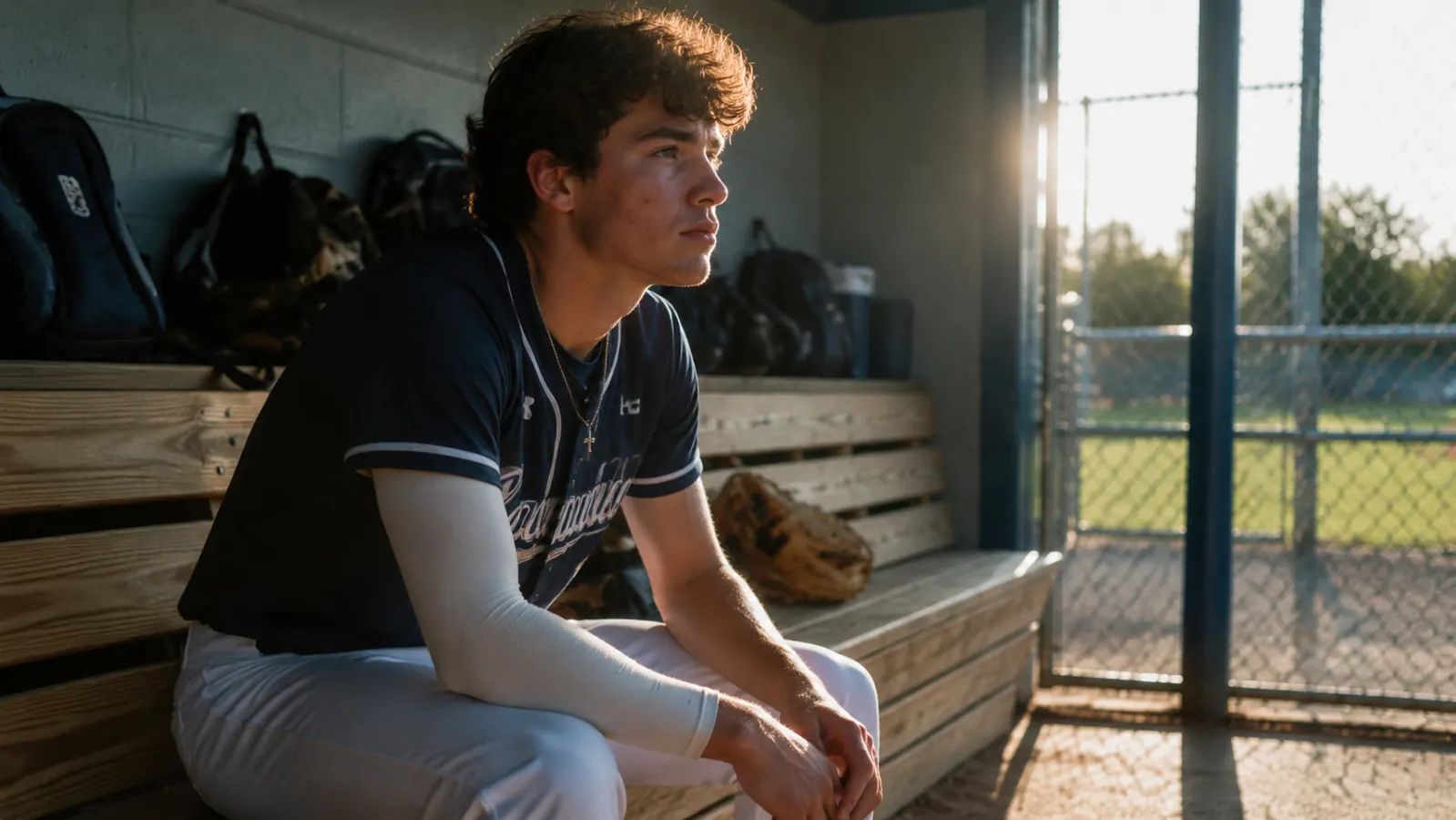
My son Marcus turns 18 in September. He has been pitching since he was nine, and for the last two years he has pitched at the varsity level for his high school and on a travel ball team that runs weekends from March through July. That is a lot of throwing. Last September I bought him his first EvoShield compression arm sleeve, and seven months later I am still recommending it to every pitcher parent who asks. I am a nurse. I know what repetitive stress does to soft tissue over time, and I had been watching his post-outing routine with growing unease every Saturday night: ice bag from the cooler wrapped in a dish towel, twenty minutes on the elbow, then a long quiet drive home where he'd hold his arm in a specific way that told me it ached more than he was letting on.
I had already taken him to our sports medicine clinic after his sophomore season. The imaging was clean. No structural damage. The physician told me what I half-knew from my own clinical background: the arm wasn't injured, it was under-recovered. He threw hard, he threw often, and the recovery window between his starts was not doing what it needed to do. The advice was sensible. Better sleep. Better nutrition. Arm care exercises. Limit pitch counts. All the right answers. What nobody mentioned was something as simple as keeping the muscle tissue warm and supported between outings.
I started reading. Not blogs. Studies. There is a reasonable body of research on compression garments and their effect on delayed onset muscle soreness and perceived exertion during recovery phases. The mechanism is not magic: graduated compression improves venous return, reduces tissue oscillation during activity, and helps maintain muscle temperature between bouts of effort. For a pitcher sitting in a dugout for two innings before coming back out to throw, that warmth retention is genuinely meaningful. A cold muscle is a stiffer muscle, and a stiffer muscle transfers force less efficiently through the kinetic chain. That is how UCL stress accumulates quietly over a season.
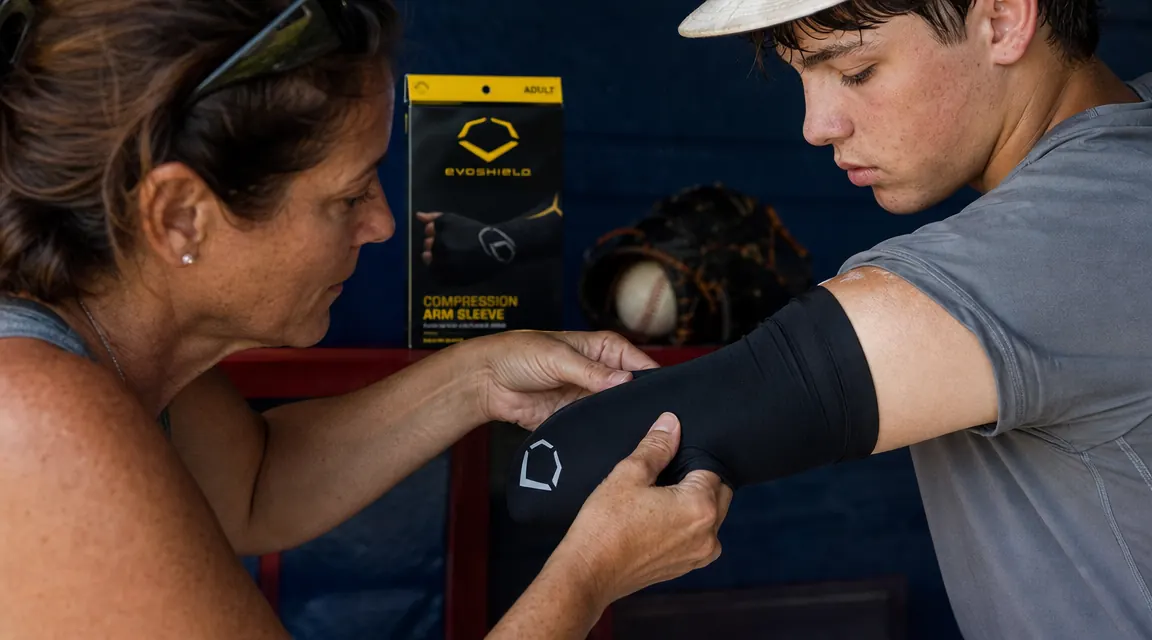
I ordered the EvoShield compression arm sleeve on a Tuesday. It arrived Thursday. I handed it to Marcus on Saturday morning, three hours before his start, and explained what it was and why I wanted him to try it. He put it on without argument, which is honestly more than I expected from a 17-year-old who was used to doing exactly what his coach said and nothing else.
I was not looking for a miracle. I was looking for one more layer of protection between my kid's elbow and a surgeon's table.
If your pitcher is icing every Saturday night, this is worth a look.
The EvoShield compression arm sleeve is what I added to Marcus's routine after researching the literature on compression and muscle recovery. It is rated 4.6 stars across nearly 2,000 reviews and costs less than two Chipotle dinners. Check the current price on Amazon before the next weekend series.
Amazon Check Today's Price on Amazon →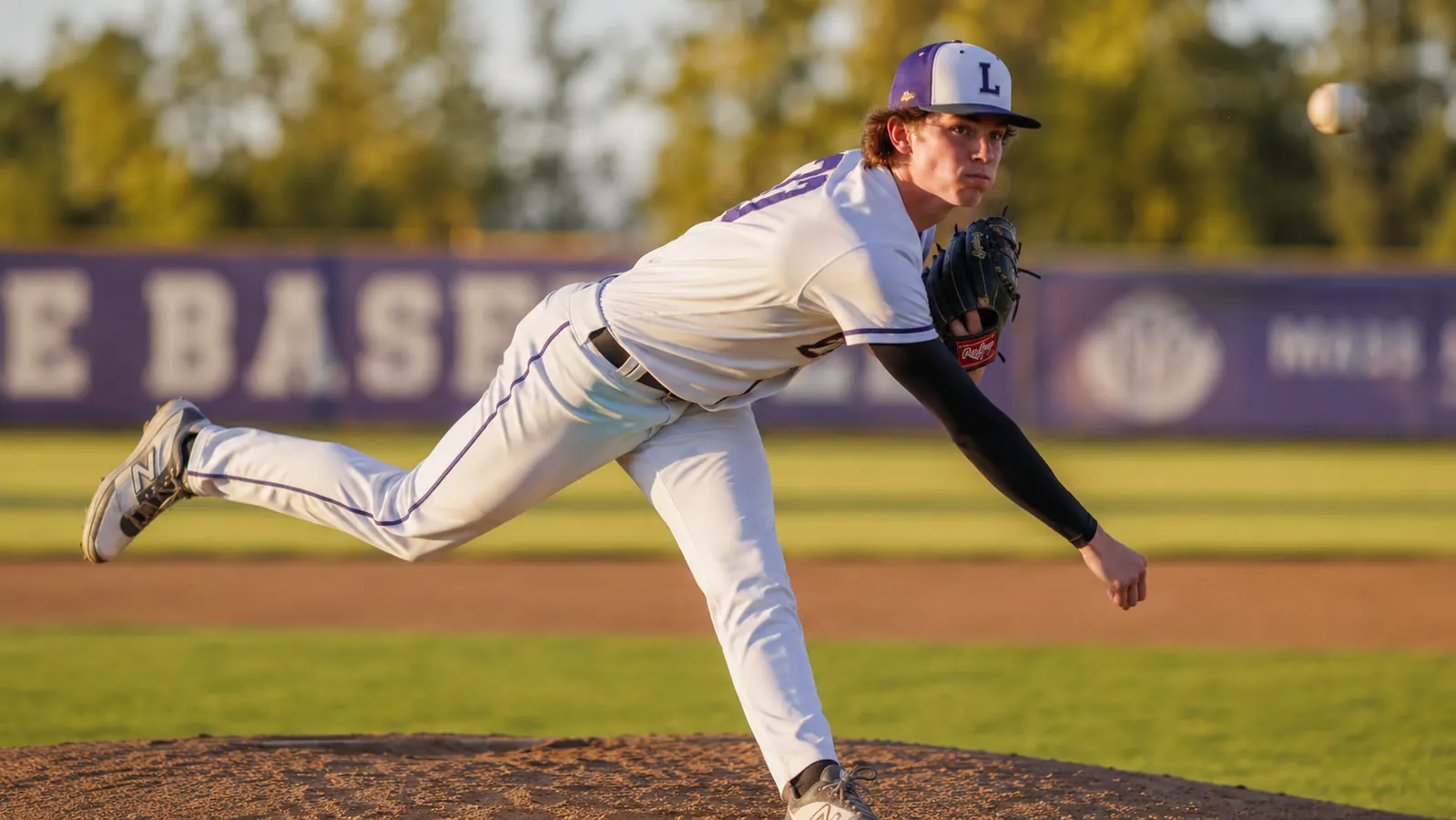
The first thing I noticed was not dramatic. He wore the sleeve from warm-ups through the end of the game, on and off the mound. In the dugout between innings, his arm stayed in a bent, supported position rather than hanging loose at his side. After the game, when I asked how his arm felt compared to a normal Saturday, he paused and said it felt less like he had thrown a game and more like he had just worked out hard. That distinction matters more than it sounds. He was not reporting pain. He was reporting fatigue, which is a biologically appropriate response to effort. The pain, the specific ache at the medial elbow that had been showing up every weekend, was quieter.
Three weeks in, I noticed something in his face that I had not seen on post-game Saturdays in a while. He was not guarding. Parents of young athletes know what guarding looks like: the slightly hunched shoulder, the careful way they open the car door, the way they won't reach across the table with the throwing arm. It is subtle and kids try to hide it, but you see it. He stopped doing it. Whether that was purely physiological or partly psychological, I cannot say for certain. What I can say is that a well-supported, warm muscle probably did some of what the ice-and-dish-towel never could.
The sleeve itself is straightforward. It runs from wrist to about mid-bicep, fits snugly without cutting off circulation, and sits cleanly under his jersey without bunching. He has washed it probably fifteen times since March and the compression has not noticeably degraded. It does not replace the arm care band work, the post-game icing, or the sleep. It is one layer in a recovery stack, not a substitute for any of it. I want to be clear about that, because I have seen parents latch onto a single product as though it solves the whole problem. It does not. But it fills a gap that nothing else in the routine was filling.
If Marcus were showing structural symptoms, I would not be writing about a twenty-dollar sleeve. I would be calling the orthopedist. This is for the pitcher whose imaging is clean, whose arm care is generally solid, but who keeps coming off the mound with more soreness than he should have. The sleeve does not fix the root cause of that soreness. It reduces the accumulation. For a kid who throws competitively from March through July with a few months of fall ball layered in, reducing accumulation is the whole game.
What I Would Tell You If We Were Sitting at My Kitchen Table
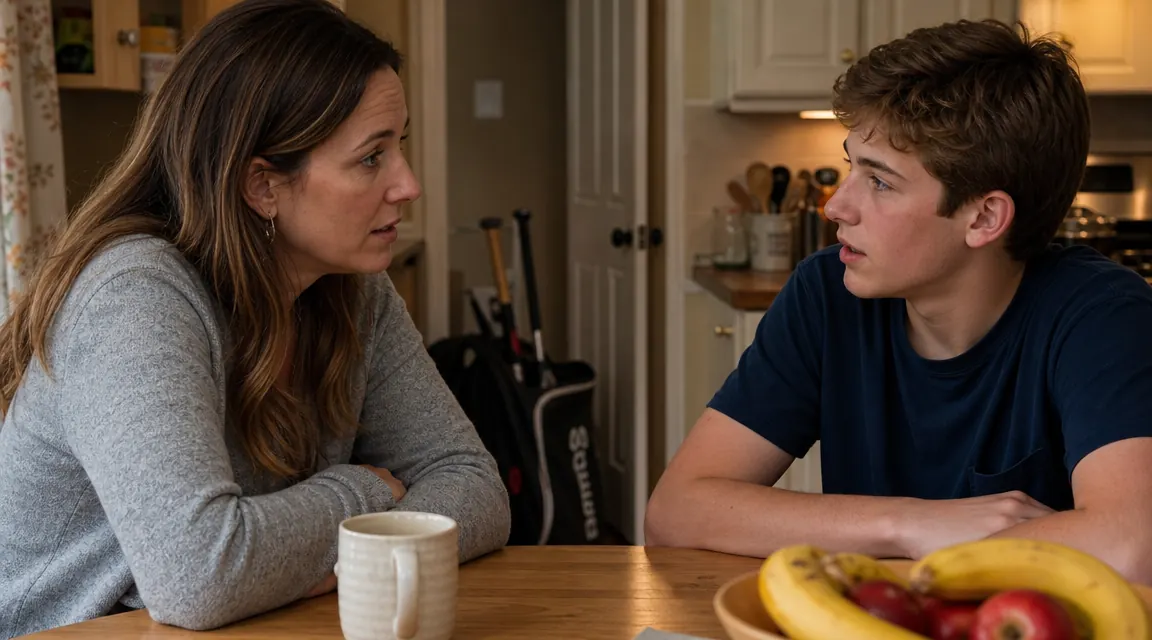
Here is what I would actually say if another pitcher mom sat down across from me and asked whether this was worth it. First, get the imaging done if you have not already. A compression sleeve does not diagnose UCL stress and it does not manage it once there is structural involvement. Get baseline imaging so you know what you are working with. Second, the sleeve is not the only thing your son should be doing for arm care. If he is not doing a consistent band routine, that is more important than the sleeve. Get that sorted first, then add the sleeve as a complement. Third, if the sleeve is going on but the guarding and the post-game soreness are not improving after four to six weeks, go back to the doctor. Some aching is normal. Patterns of pain that persist mean something else is happening. And finally: at current pricing, this costs less than a tank of gas. If there is a reasonable chance it reduces wear on tissue that cannot be surgically restored to its original state, that math is easy for me. I bought it. I would buy it again.
One more layer of protection for the arm your kid has worked years to develop.
The EvoShield sleeve is what I reach for when Marcus pitches on the weekend. It has held up through a full travel ball season of washing and wearing. If you are already doing the arm care work and want to add something that supports the recovery window between outings, this is where I would start.
Amazon Check Today's Price on Amazon →