

My son Marcus is 17, throws about 87 miles per hour off a full high school season of work, and has had two separate conversations with an orthopedic surgeon about his UCL. Neither visit ended in surgery, and I want to keep it that way. One of the things I have been most careful about is the gap between him arriving at the field and actually throwing his first warm-up pitch. That gap is where injuries happen. The arm is cold, the tissue is stiff, and coaches are already calling for bullpen time. Most kids just throw harder to feel loose faster. That is backwards, and it worries me every single game day.
Wearing a compression sleeve during the pre-game period is not a magic fix. But it is one specific, evidence-supported tool that helps keep the arm muscles warmer during the time between the locker room and the mound. This guide walks through the five-step protocol I use with Marcus on game days, where the EvoShield compression sleeve fits into that sequence, and what I watch for when something feels off. This is what I would tell any pitcher parent who asked me at the concession stand.
If your pitcher is walking onto the field with a cold arm, a compression sleeve is the cheapest insurance you will find.
The EvoShield arm sleeve keeps muscles warmer between warmup phases, reduces bench-to-bullpen temperature loss, and fits under a jersey without bulk. It is what Marcus wears every start.
Amazon Check Today's Price on Amazon →Step 1: Sleeve On Before You Leave the Car (T-Minus 60 Minutes)
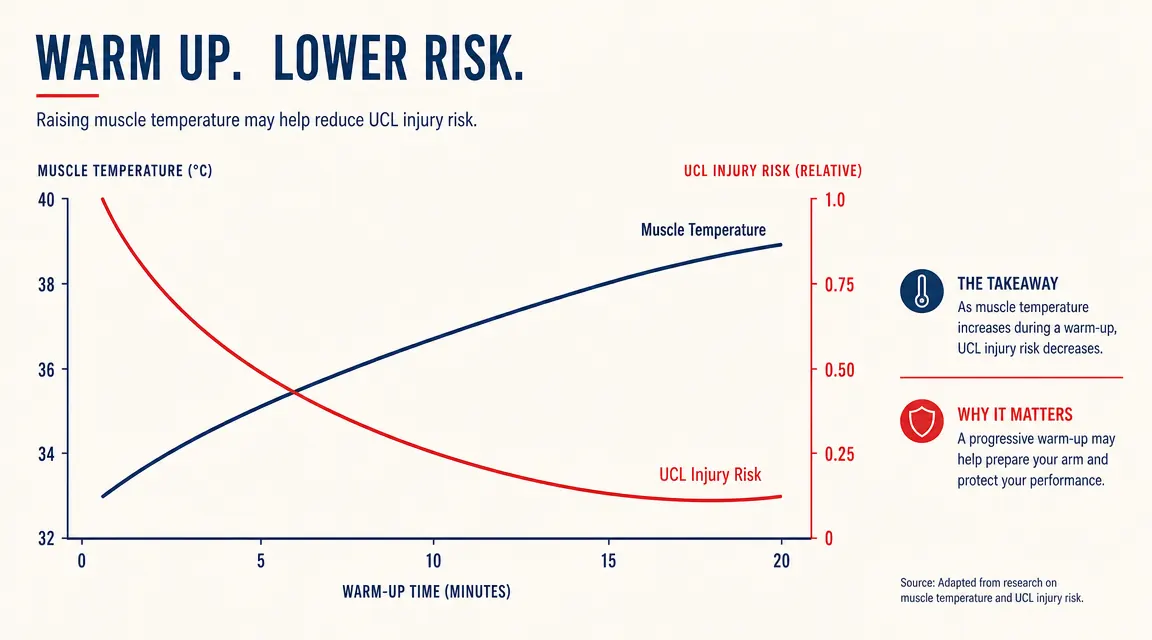
The single biggest mistake I see is pitchers putting the sleeve on when they are already at the field, walking to the bullpen. By then, you have already burned the most valuable warming window. The sleeve needs time to trap body heat against the soft tissue of the forearm, elbow, and lower bicep. Marcus puts his EvoShield sleeve on in the car, before we park. That sounds extreme, but muscle temperature drops faster than most people expect when you go from a warm vehicle to a 60-degree spring evening. Getting the sleeve on 45 to 60 minutes before first pitch gives the compression fabric time to do its actual job.
The physiology here is straightforward. Warmer muscles have lower viscosity, meaning the fibers slide against each other more easily and are less prone to micro-tears under explosive load. The UCL is not a muscle, but the muscles and tendons surrounding the medial elbow support it during the valgus stress of a pitch. If those surrounding tissues are stiff from cold, more force transfers directly to the ligament. A compression sleeve cannot warm the elbow joint itself the way deep tissue does, but keeping the superficial musculature warm reduces one piece of the injury equation.
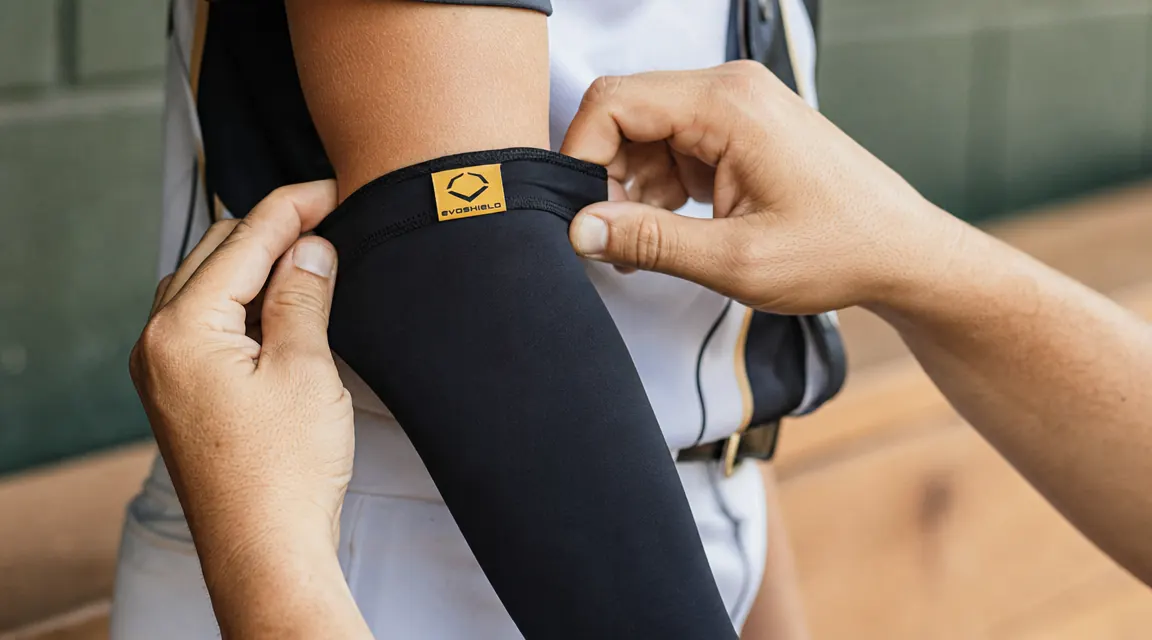
Fit matters here. The sleeve should feel snug from mid-forearm to just above the elbow crease, with no bunching at the joint. If it slides down during catch, it is too loose and it is not retaining heat effectively. The EvoShield sizing runs close to true for most teen pitchers. Marcus is a 6-foot, 178-pound junior and the medium fits him well.
Step 2: Light Movement, Not Static Stretching (T-Minus 45 Minutes)
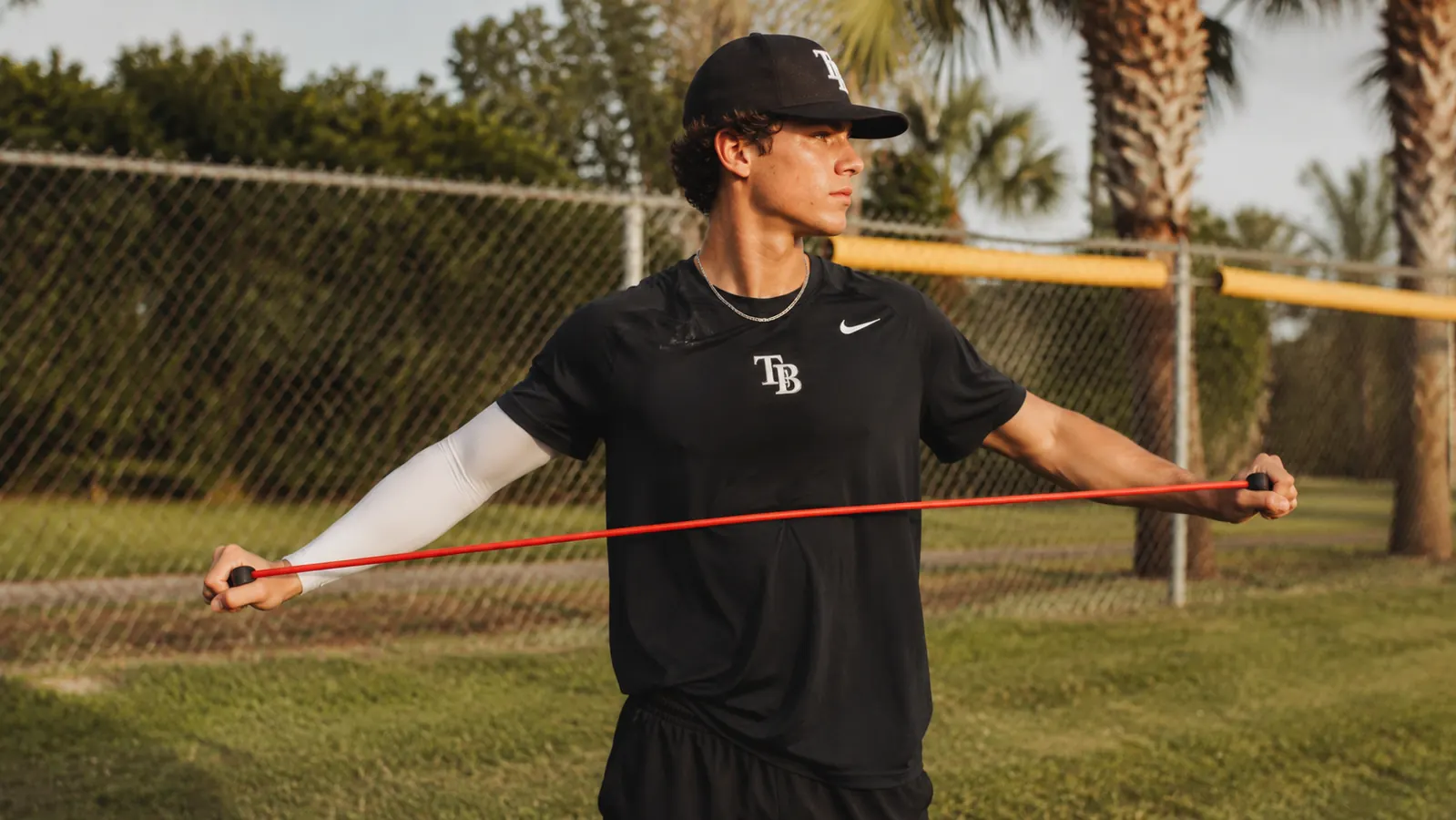
Static stretching before throwing is one of those things that sounds sensible but is not supported by the sports medicine literature when it comes to injury prevention in overhead athletes. Prolonged static holds on cold tissue can actually reduce force production in the short term and provide no protective benefit. What works instead is low-intensity dynamic movement: arm circles, shoulder rolls, torso rotations, and light band work.
This is where having Jaeger J-Bands in the bag is genuinely useful. Marcus does the standard J-Bands activation sequence starting about 45 minutes before a start, sleeve already on. He goes slow, maybe 50 percent effort on the first set, focused on feeling the rotator cuff muscles fire rather than moving the band quickly. The goal at this stage is blood flow and neuromuscular activation, not strength. You want the tissues to feel alive, not fatigued. For parents reading this who want to understand that routine in more detail, I wrote about how J-Bands fit into our longer arm care practice in the Jaeger J-Bands review if you want to see what twelve months of daily use has looked like for us.
Step 3: Sleeve Stays On During Long Toss (T-Minus 30 Minutes)
Many pitchers take the sleeve off when they start throwing because it feels constricting. Marcus did this the first few games too. Then I read through some research on compression garments and arm temperature during throwing progression and realized he was doing the opposite of what helps. The compression sleeve should stay on through the entire long toss phase. This is not about restricting the arm. A properly fitted sleeve does not limit range of motion at the elbow or shoulder during throwing. What it does is continue trapping metabolic heat as the muscles warm up through activity, so the warming happens faster and the temperature is maintained more consistently.
Start at 60 feet and work out gradually, the way any coach would instruct. There is nothing different about the throwing progression itself. The sleeve is just part of the uniform at this point. Marcus stops at about 90 feet for long toss before a start, as his coach does not want him going to max distance on game days. That is smart protocol and we follow it. The sleeve comes off only when he goes into the bullpen to throw off the mound, because by that point the arm is genuinely warm and he prefers the feel of his jersey without it on the mound.
Step 4: The Bench-to-Bullpen Window Is the Riskiest Moment
Here is the piece of the warm-up protocol that most parents and even coaches underestimate. Your pitcher finishes long toss, sits on the bench for twenty minutes while the lineup is announced and infield practice wraps up, then gets called to the bullpen. That bench period matters enormously. The arm temperature that was just built up starts dropping within minutes when throwing stops. If your son sits for twenty minutes in cool air without the sleeve on, he is starting his bullpen session with a meaningfully cooler arm than when he finished long toss.
This is the window where the compression sleeve earns its keep the most. Marcus puts it back on the moment he sits down after long toss, even if he is only going to wear it for fifteen minutes. The sleeve goes back on, he stays warm, and when the bullpen call comes he is not starting from a cold baseline again. I have seen him wave this off on days when he is chatting with teammates and not thinking about it, and those are the games where his first few warm-up pitches in the bullpen feel stiff to him. It is not proof of anything, but the pattern is consistent enough that I remind him every single time.
The bench-to-bullpen window is where most arm temperature gets lost. If your pitcher sits for twenty minutes without the sleeve after long toss, he is not starting the bullpen session where he finished long toss. He is starting colder.
Step 5: Bullpen and First Inning, Then Decide Whether the Sleeve Stays
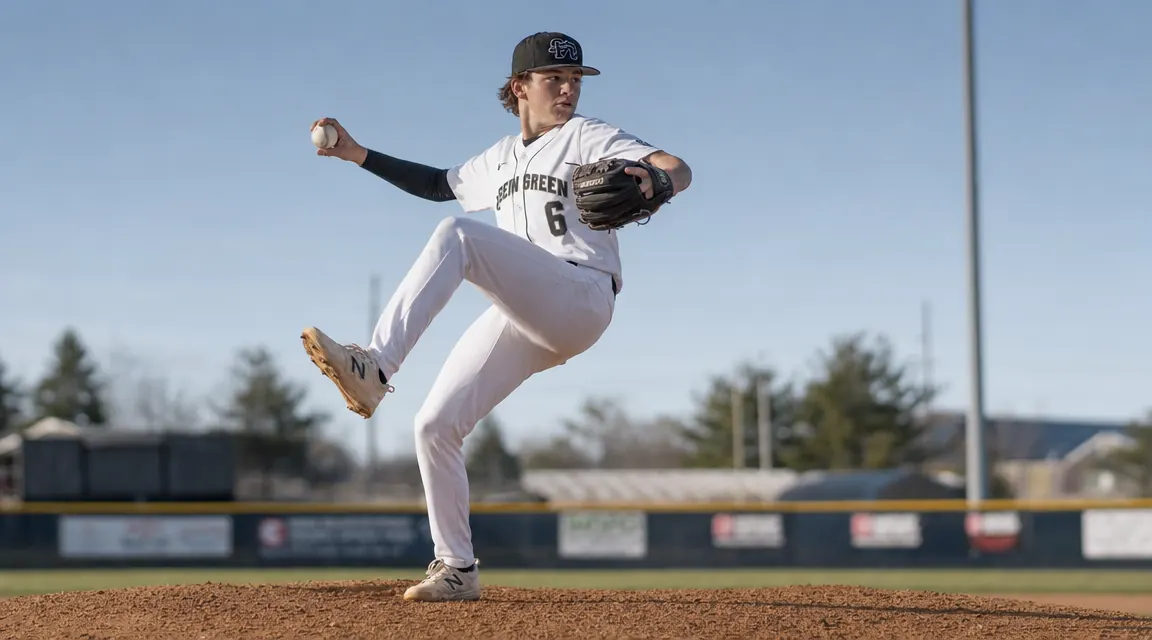
Once Marcus is in the bullpen and working through his pre-game session off the mound, the sleeve comes off. He throws bullpen bare-armed because he has built his entire delivery feel that way and changing that on game day is not worth it. Some pitchers do wear a sleeve on the mound. There is no rule against it in high school, and the compression during pitching does not hurt anything. But Marcus is comfortable and consistent without it by that point in the warm-up, and we do not mess with comfort on game day.
Between innings, the sleeve goes back on whenever he is sitting in the dugout. On cold days, particularly the spring tournaments where it is 48 degrees and windy, this is non-negotiable. Arm temperature falls fast when you are sweating and sitting still in a cold breeze. On warm days in July when it is 85 degrees out, he sometimes skips the sleeve between innings and that is fine. The protocol scales with the conditions. The colder the environment, the more rigidly we follow it.
One thing I do watch closely: if Marcus ever says his arm feels tight or the elbow has a pinch at any point in this warm-up sequence, we stop and reassess. A compression sleeve is not a substitute for reading your pitcher's feedback. It is a tool that supports a proper warm-up. If the arm hurts before he has thrown a pitch in a game, we pull him, full stop. I have had that conversation with his coach and he is fully aligned. No game is worth accelerating a UCL injury.
What Else Helps Keep the Arm Ready
The compression sleeve is one layer of a pre-game protocol that also includes band work, a gradual throwing progression, and paying attention to environmental conditions. If you are building out your pitcher's full warm-up toolkit, the thing I would add after the sleeve is a structured resistance band activation routine. The two products we rely on most are the EvoShield sleeve for temperature retention and the Jaeger J-Bands for pre-throw activation. They work differently and they work together. You can read our full experience with the EvoShield in the long-term review, which covers six months of Marcus wearing it in all conditions.
Beyond gear, the other element I push hard on is consistency. It does not matter how good the protocol is if Marcus decides to skip the sleeve on a cold April evening because he forgot to pack it. The sleeve is now a permanent resident of his bat bag, same as his batting gloves and his cleats. Making it a habit removes the decision entirely, and with teenage athletes, habit is everything.
If you are just starting to think about arm care tools for your pitcher, the compression sleeve is the lowest-cost, lowest-barrier entry point. It is under twenty dollars, it requires no technique to use correctly, and the downside risk is zero. You are not going to hurt an arm by keeping it warm. The question is just whether your pitcher will actually wear it consistently, and that is a conversation worth having before the season gets going.
Start with the sleeve. It is the simplest part of a pre-game arm care protocol and it costs less than a tournament entry fee.
The EvoShield compression arm sleeve holds up to a full season of game-day use, fits under a jersey, and stays in place through long toss. It is the first thing we packed for Marcus and the last thing I would remove from his bag.
Amazon Check Today's Price on Amazon →