When my son Marcus's orthopedist handed us a printout last spring, it said one thing at the top: 'Begin rotator cuff and scapular stabilizer resistance band work immediately.' That was the starting point. What it did not say was which band system to use, at what resistance, or how often. That sent me down a rabbit hole I spent two weeks inside, because in the world of resistance bands for pitchers, two names come up constantly: Jaeger J-Bands and TheraBand.
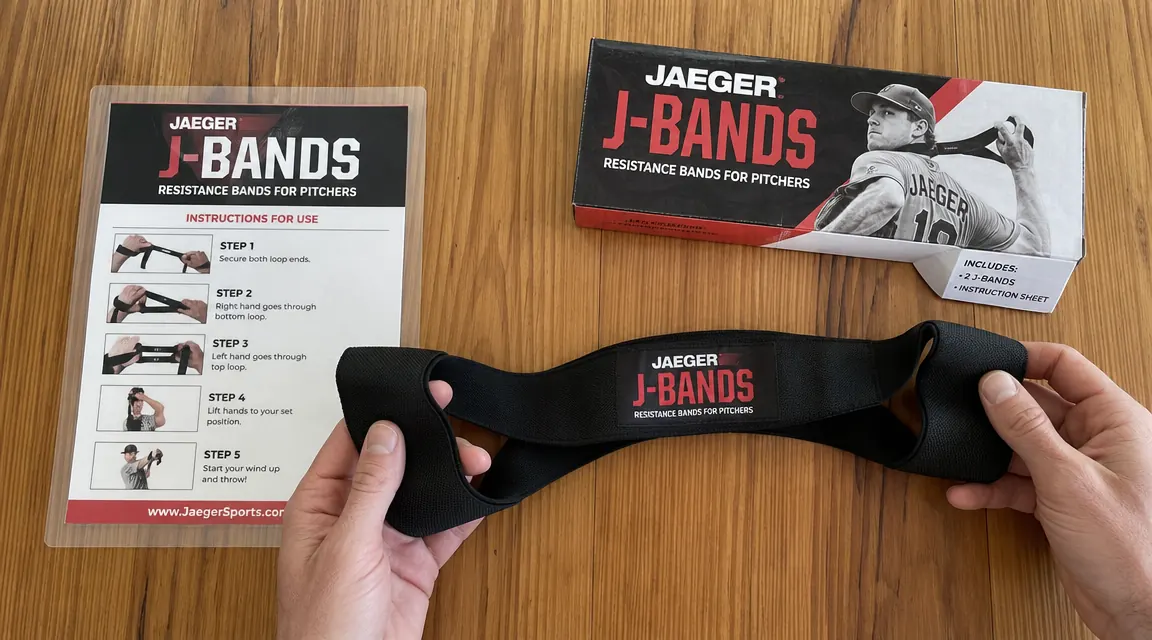
The short answer is that these are not really the same category of product, even though they look similar hanging on a wall at a sporting goods store. TheraBand is a physical therapy supply that has been around since the 1970s. J-Bands are a baseball-specific arm care tool built explicitly around the throwing motion, with a laminated exercise protocol designed by pitching coach Alan Jaeger, who has worked with professional and youth arms for decades. If your son is a pitcher trying to prevent injury and maintain arm health across a long season, those differences matter more than you might expect.
| attribute | left | right |
| attribute | left | right |
| attribute | left | right |
| attribute | left | right |
| attribute | left | right |
| attribute | left | right |
| attribute | left | right |
| attribute | left | right |
| attribute | left | right |
| attribute | left | right |
Where Jaeger J-Bands Win
The single biggest advantage J-Bands have over TheraBand is that someone did the work of figuring out what a pitcher's shoulder and elbow actually need, and then built the product and the protocol together as a system. Alan Jaeger's arm care routine covers internal and external rotation, scapular depression, horizontal abduction, and several movement patterns that specifically mirror the deceleration phase of throwing, which is where most rotator cuff stress happens. When I compared his protocol to the exercises Marcus's PT had written down, there was more than 70 percent overlap. The PT had to build that list from scratch from clinical guidelines. J-Bands ship with it printed on a laminated card.
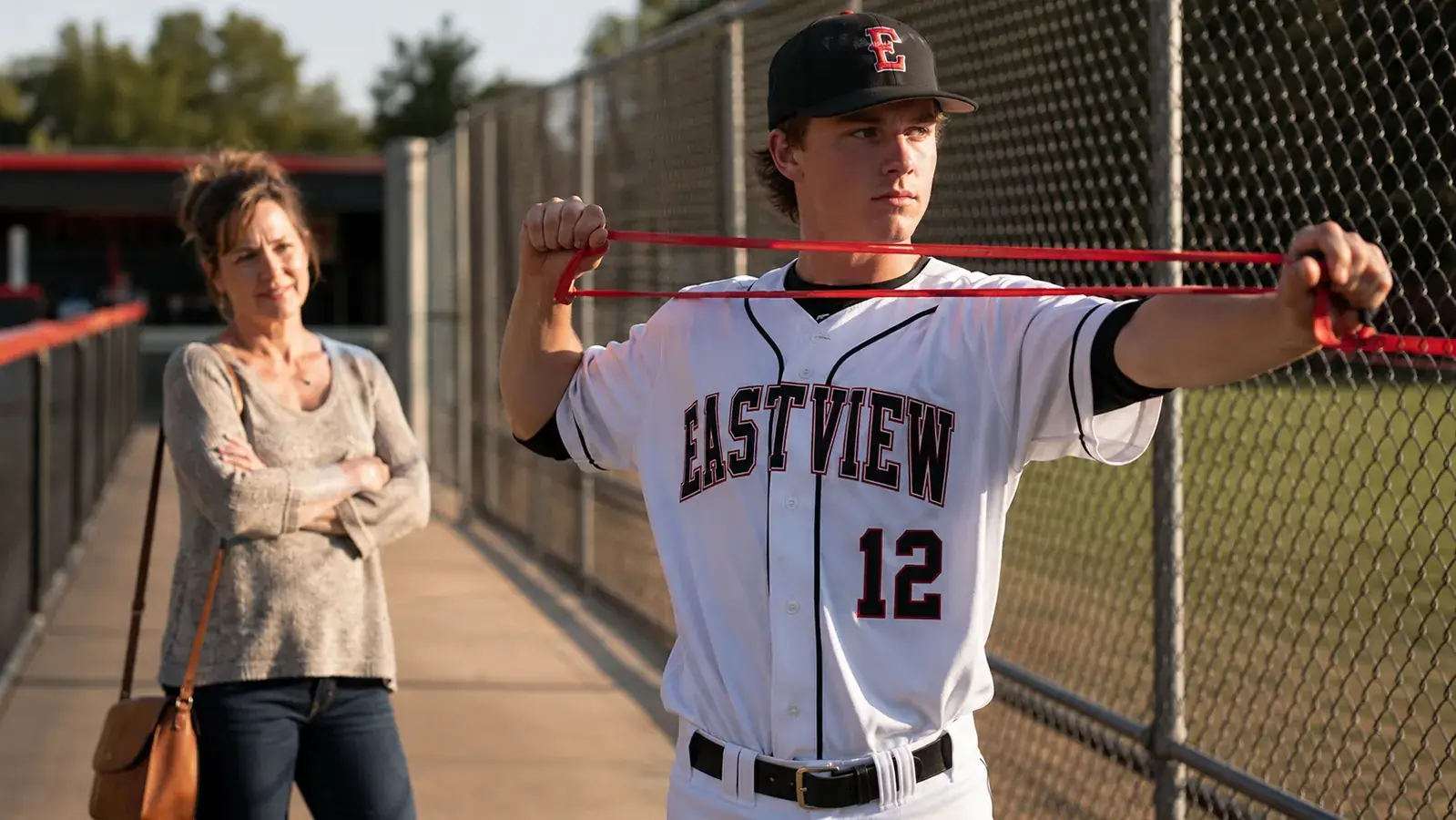
The resistance level of the J-Bands is also calibrated for pitching specifically. The two bands in the set are not light and heavy in a general fitness sense. They are sized to work the rotator cuff, posterior shoulder, and scapular stabilizers at loads that build functional strength without overtaxing inflamed or fatigued tissue the day after a start. Marcus is 17, throws about 85 mph, and the standard J-Bands set is exactly right for him at this stage. A general TheraBand setup requires you to guess at which color level is appropriate, and most pitchers and parents choose wrong. They either go too light and get no training effect, or they pull too heavy and add stress to tissue that is already irritated.
Where TheraBand Wins
TheraBand's legitimate advantages are cost, availability, and versatility. If you need a resistance band today and you live anywhere near a CVS, Walmart, or physical therapy supply store, you can have one in 20 minutes. That accessibility matters when a team mom is at a tournament hotel two states away and her son's arm is tight. TheraBand is also genuinely useful for other body parts, other athletes in the family, and general physical therapy exercises that have nothing to do with baseball. The bands are thin, flat, and easy to pack in a backpack or purse.
TheraBand is also the preferred tool for many orthopedic physical therapists who want to prescribe very specific resistance levels and progress a patient through documented percentage increases. The color-coded system gives PTs precise control that the two-band J-Bands set does not offer. If Marcus were post-surgical or on a strictly supervised PT protocol, his therapist would almost certainly want TheraBand because she controls the progression. In a clinical rehab context, TheraBand has the edge.
If your pitcher does not have a dedicated arm care band routine, this is the place to start.
The Jaeger J-Bands set includes the laminated 12-exercise protocol that most pitching coaches and sports medicine programs use as their baseline arm care routine. One purchase, one system, no guesswork.
Amazon Check Today's Price on Amazon →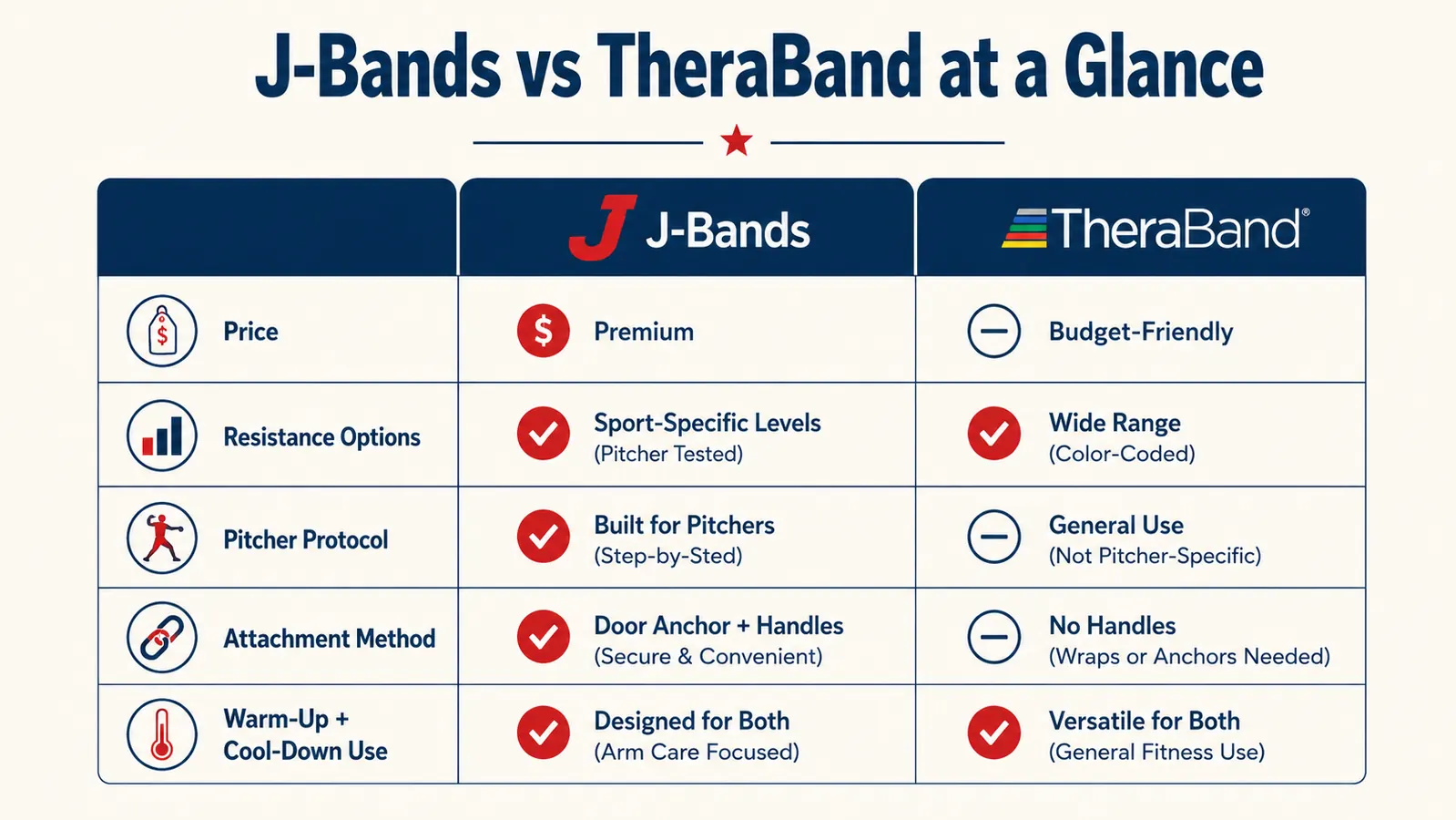
The Protocol Problem
Here is the thing nobody talks about when TheraBand gets recommended to a pitcher's parent: the band is just a band. The exercises are not in the box. I have watched three different coaches at three different tournaments hand a pitcher a TheraBand loop and say 'do some band work before you throw' and watched that pitcher do three internal rotation circles and then move on. That is not arm care. That is theater.
The J-Bands protocol is specific. It has 12 exercises done in a specific sequence. The sequence matters because you are working from larger muscle groups to smaller stabilizers, activating the rotator cuff in the correct functional pattern for throwing, and then cooling down the posterior shoulder and periscapular muscles that take the most stress on pitch deceleration. When Marcus started the full protocol last May, he was doing it wrong for the first few days because the instruction sheet alone took some studying. By week two he had it memorized. By week six his post-outing shoulder soreness was noticeably shorter in duration. I do not attribute that entirely to the bands, but the structured routine mattered.
The band is not the intervention. The protocol is. TheraBand gives you the tool without the plan. J-Bands give you both.
Resistance Level Reality Check
TheraBand's color-coded resistance system is clinically useful, but it requires a knowledgeable person to select the right starting color for a pitcher. The commonly sold colors at retail stores are yellow (extra light), red (light), green (medium), and blue (heavy). Most teen pitchers I have talked to either buy green because it sounds like the middle option or buy the color their coach mentioned once without knowing why. Green TheraBand generates approximately 3.7 pounds of resistance at 100 percent elongation and approximately 6.2 pounds at 150 percent. For external rotation work on a 15-year-old whose shoulder has been fatigued by a 90-pitch outing, that may be too much. The J-Bands are pre-set at a resistance that experienced pitching coaches have established as appropriate for arm care use, not general strength training.
That said, I am not claiming J-Bands resistance is perfect for every pitcher. A 22-year-old who throws 94 mph and has been doing arm care work for four years may want to progress beyond the standard J-Bands resistance. At that point, TheraBand's higher resistance options become relevant. For teen pitchers in the 13-to-18 range who are building the arm care habit from scratch, the J-Bands load is calibrated appropriately.
What the Research Actually Says
I want to be careful here because the research on resistance band training for pitcher injury prevention is promising but not definitive. A 2018 study in the Journal of Shoulder and Elbow Surgery found that pre-season shoulder strength training programs reduced upper-extremity injury rates in adolescent baseball players compared to those with no structured program. The studies that have looked at TheraBand-based PT protocols for shoulder impingement and rotator cuff tendinopathy show genuine clinical benefit in general shoulder populations. There is no head-to-head randomized trial comparing J-Bands to TheraBand specifically in pitchers, and I would be skeptical of anyone who claimed otherwise.
What the evidence does support clearly is that structured, consistent shoulder and scapular stabilizer training reduces pitcher injury rates, and that the quality of the exercise selection matters more than the band type. By that standard, J-Bands wins the comparison not because the latex tubing is magic, but because the included protocol is a thoughtful, specific exercise selection that reflects what the research says a throwing shoulder needs. TheraBand plus a detailed protocol from a sports PT would accomplish the same thing. The problem is that most families do not have access to a sports PT who will write that protocol. J-Bands ships it in the box.
Who Should Buy Which
Buy the Jaeger J-Bands if your pitcher is between 13 and 19, is pitching in organized baseball (travel ball, high school, showcases), and does not currently have a structured arm care routine. The protocol that comes with J-Bands is a complete system that serves both as pre-throw activation and post-outing recovery work. For the price, you are buying the protocol and the built-in protocol compliance that comes from having a dedicated tool that lives in the baseball bag.
Choose TheraBand if your son is working with a physical therapist who has prescribed specific resistance levels and exercises for a diagnosed injury or post-surgical recovery, or if you need something available today at a local store. TheraBand is also the right choice if your pitcher's PT wants precise, graduated resistance progression that the two-band J-Bands set does not provide. TheraBand is a legitimate clinical tool. It is simply not a pitcher-specific arm care system.
If you are on the fence, consider that Marcus's orthopedist prescribed 'resistance band work' generically. His PT handed us TheraBand loops. But when I researched what the best pitching-specific arm care programs actually looked like, every one of them referenced J-Bands or an equivalent pitcher-specific protocol. We bought the J-Bands and brought the laminated instruction sheet to Marcus's PT appointment. She looked it over, said it was a solid protocol, and incorporated it into his program. That is the sequence I would recommend to any pitcher-parent who has the time to do the homework.
Most pitcher parents wish they had started arm care work a season earlier than they did.
The Jaeger J-Bands set has a 4.8-star rating from more than 3,700 buyers, most of them baseball families. The laminated protocol is included. Everything you need to start a real arm care routine is in the bag.
Amazon Check Today's Price on Amazon →