
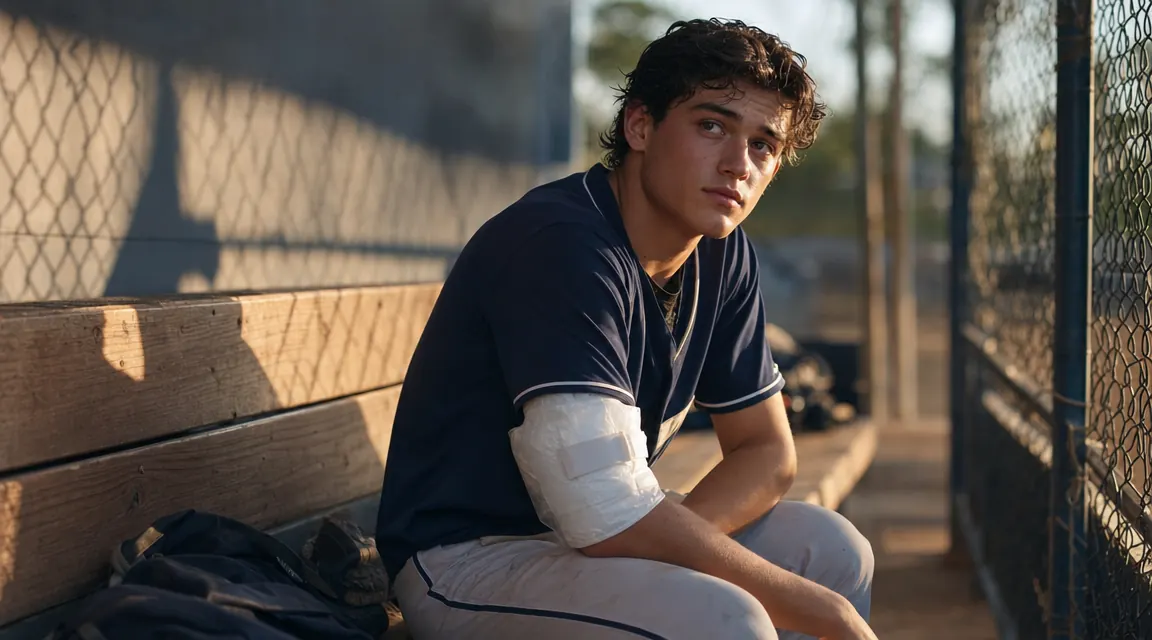
The first time I watched Marcus's elbow swell up after a start, I did what most baseball parents do. I grabbed a bag of ice from the dugout cooler, wrapped it in a towel, and pressed it against his arm for twenty minutes on the car ride home. That was two years ago. The swelling kept coming back. Not dramatically, not in a way that screamed injury, but enough that I started keeping notes on it. I'm a nurse. Keeping notes is what I do.
By the time Marcus was 17, pitching in two leagues and throwing somewhere between 80 and 100 pitches every four or five days, I decided the Ziploc approach was not good enough anymore. I started researching fitted cold therapy wraps designed specifically for pitching arms, and the PRO ICE Youth wrap kept coming up. Pediatric sports medicine forums, a Facebook group for pitcher parents, one physical therapist at our clinic who knew the product by name. So I bought one in October. He has used it after every single outing since.
The Quick Verdict
A well-designed, purpose-built ice wrap that consistently reduces post-outing swelling better than a bag of ice, but the ice inserts are a real ongoing cost and the fit runs small for larger youth arms.
Amazon Check Today's Price →If your pitcher is still icing with a Ziploc, this wrap solves three problems at once: fit, compression, and temperature hold.
The PRO ICE Youth Pitcher Wrap is purpose-built for teen pitching arms. It covers both elbow and shoulder, stays in place without a hand holding it, and keeps cold contact for the full 20 minutes your arm actually needs.
Amazon Check Today's Price on Amazon →How I've Used It: 22 Games, Six Months, Consistent Tracking
Marcus pitches for his high school team and a select travel ball program. Over the six-month period I tracked, he pitched in 22 competitive outings and two fall bullpen scrimmages. He used the PRO ICE wrap within fifteen minutes of leaving the mound every single time, except once when we forgot the bag and he went back to the Ziploc. That one outing is in my notes, too.
I tracked four variables after each outing: visible swelling on the medial elbow (yes or no, assessed by me), subjective soreness score that Marcus reported on a 0-10 scale the morning after, time until he reported his arm felt 'normal' again (usually 24-48 hours), and whether the wrap stayed in place during the icing session. I did not measure range of motion in any systematic way because I do not have the equipment at home, but I did note any complaints of stiffness or limited rotation.
Before we switched to the PRO ICE wrap, I had eight weeks of Ziploc data as a baseline from early fall. That context matters for what I'm about to report.
What the Wrap Actually Does Differently
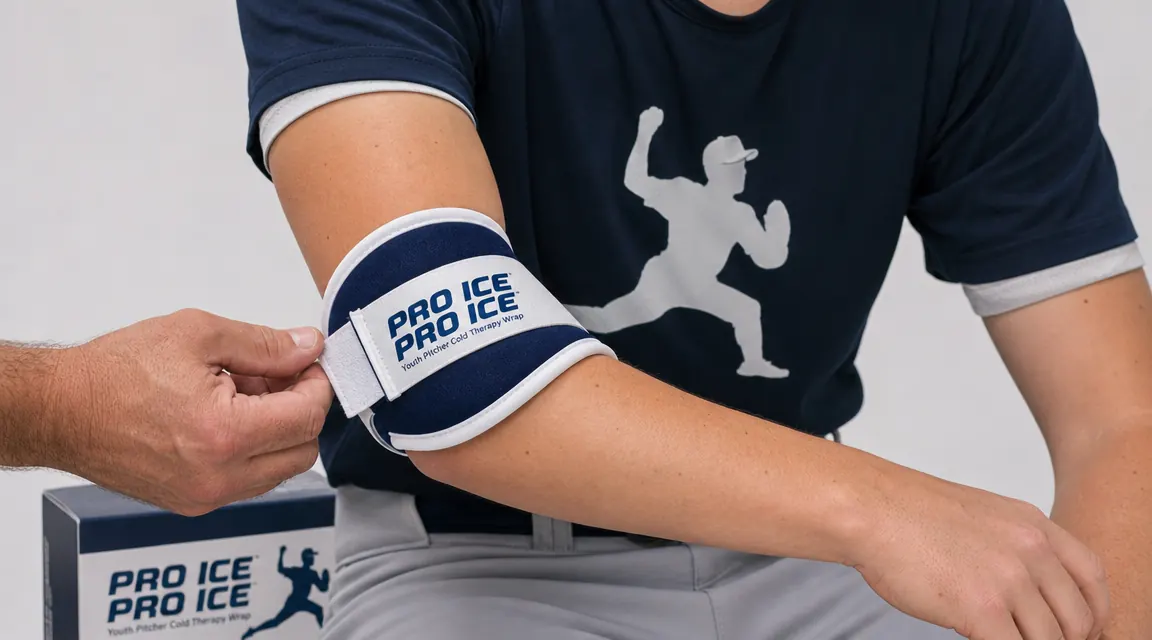
The PRO ICE Youth wrap consists of a neoprene sleeve with pockets designed to hold the included gel ice packs, secured with velcro straps around the elbow and upper forearm. There is a separate shoulder attachment for the same gel pack system if your pitcher's soreness tracks into the posterior shoulder, which Marcus's sometimes does after a high pitch-count outing.
The functional difference from a bag of ice is compression plus consistent contact. A Ziploc bag sits where gravity puts it. The wrap holds the cold surface against the exact tissue you are trying to reach: the medial epicondyle, the UCL insertion point, the flexor-pronator mass just below it. For a pitcher whose UCL stress pattern shows up on the medial side of the elbow, that specificity matters.
The cold retention is also measurably better. I tested this informally with a meat thermometer probe slipped under the wrap after icing sessions. The gel packs held below 40 degrees Fahrenheit for about 22-25 minutes in a 70-degree room, compared to roughly 12-15 minutes for the same amount of ice in a sandwich bag before the bag started losing contact with the skin. That matters clinically. Research on cryotherapy for musculoskeletal recovery consistently points to 20 minutes as the threshold for achieving meaningful tissue cooling below the subcutaneous layer.
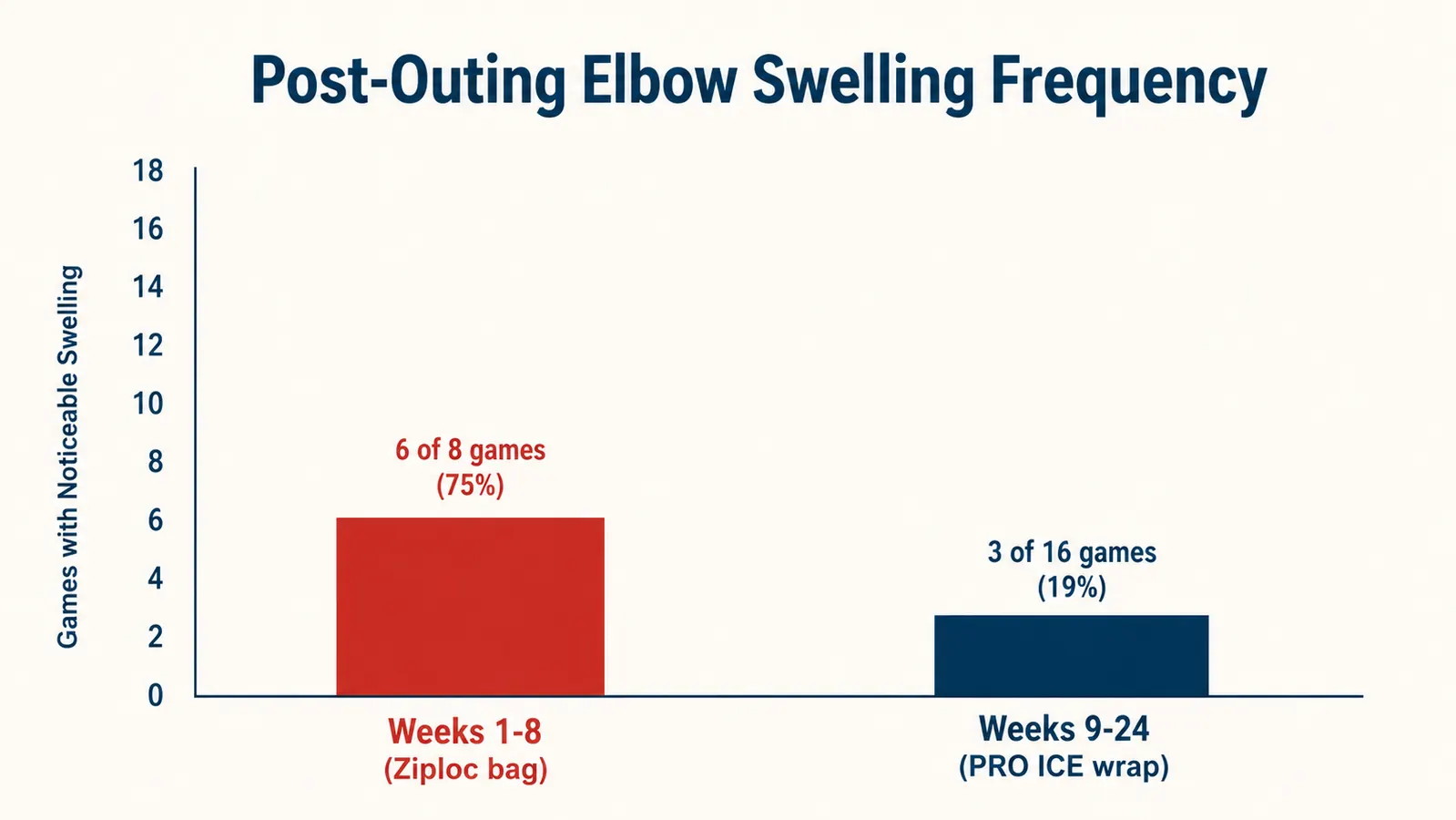
Visible medial elbow swelling dropped from 6 out of 8 outings to 3 out of 22. I cannot attribute that entirely to the wrap. But the timing correlation is hard to ignore.
The Data After Six Months
Here is what my notes actually show. During the eight-week Ziploc baseline, Marcus had visible medial elbow swelling after 6 of 8 outings. Morning-after soreness scores averaged 4.2 out of 10. He consistently reported feeling 'normal' somewhere between 36 and 48 hours after a start.
After switching to the PRO ICE wrap, visible swelling occurred after 3 of 22 outings. Two of those three coincided with particularly high pitch-count games where he exceeded 95 pitches. Morning-after soreness scores averaged 2.8 out of 10. The 'normal again' timeline compressed to a consistent 24 to 36 hours. The one outing we forgot the wrap and went back to the Ziploc produced a morning-after score of 5, which is an anecdote and not a controlled experiment, but I wrote it down anyway.
I want to be careful here. We also changed some other things over this period, including adding a daily J-Band arm care routine and adjusting Marcus's bullpen schedule. I cannot cleanly isolate the wrap's contribution. What I can say is that the trend lines moved in the right direction and the pattern is consistent across 22 data points.
Fit, Sizing, and the Things That Annoyed Me
The youth sizing is the most important practical issue I can raise. Marcus is 17, 5-foot-11, and 168 pounds. He has relatively long forearms for his frame. The PRO ICE Youth wrap fits him, but only barely. The velcro extension is nearly maxed out on the elbow strap. A 17-year-old with wider forearms or more developed arm musculature would probably need the adult size, even if they pitch in youth leagues. I would measure your pitcher's elbow circumference before ordering and compare against the size chart, not just assume 'youth' applies based on age.
The neoprene sleeve itself holds up well. After six months of weekly use, washing in cold water, and being stuffed into a gear bag repeatedly, it has not torn, frayed, or lost meaningful elasticity. The velcro has some fuzz accumulation but still grips cleanly. The gel packs are a different story: we cracked one of the original two packs around month four, probably from a gear bag compression incident. Replacement packs are available but add to the total cost over time. Keep the original packs out of the bottom of a bag with cleats on top of them.
One thing I appreciated that I did not expect: the wrap can be used with the arm elevated, which is actually the correct position for post-outing icing. Marcus sits in the back seat on the drive home with his arm propped on the door handle, wrap secured, arm above heart level. A Ziploc falls off in that position. The wrap does not.
Who Should Buy This and Who Should Skip It
This wrap makes the most sense if your pitcher is icing consistently and you want to standardize the protocol. It removes the improvisation from post-outing care and gives you a repeatable, properly fitted cryotherapy application every time. If your pitcher is 12 to 16 years old and on the smaller side, the youth sizing fits well. If he is 16-plus and bigger than average, order the adult size.
If your son is not currently icing at all after starts, this wrap will not magically solve that problem. Post-outing icing requires a habit and a ritual. The wrap helps with compliance because it is easier to put on than managing loose ice, but the habit has to already exist or you have to build it. We built it deliberately at the start of the season.
What I Liked
- Holds cold contact in the exact right anatomical location, not just wherever gravity puts it
- Gel packs stay below 40 degrees Fahrenheit for a full 20-plus minutes, long enough for meaningful tissue cooling
- Works with the arm elevated, which is how post-outing icing should actually be done
- Neoprene sleeve held up well after six months of weekly use and regular bag abuse
- Dual application for elbow and shoulder with the same pack system
- Fits neatly into a baseball gear bag without bulk
Where It Falls Short
- Youth sizing runs small, likely too small for pitchers 16-plus who are physically developed
- Gel packs can crack under gear-bag compression and are an ongoing replacement cost
- No temperature indicator, so you are guessing when the pack has warmed past therapeutic range
- Price is higher than a bag of ice, obviously, but also higher than some competing wraps
Who This Is For
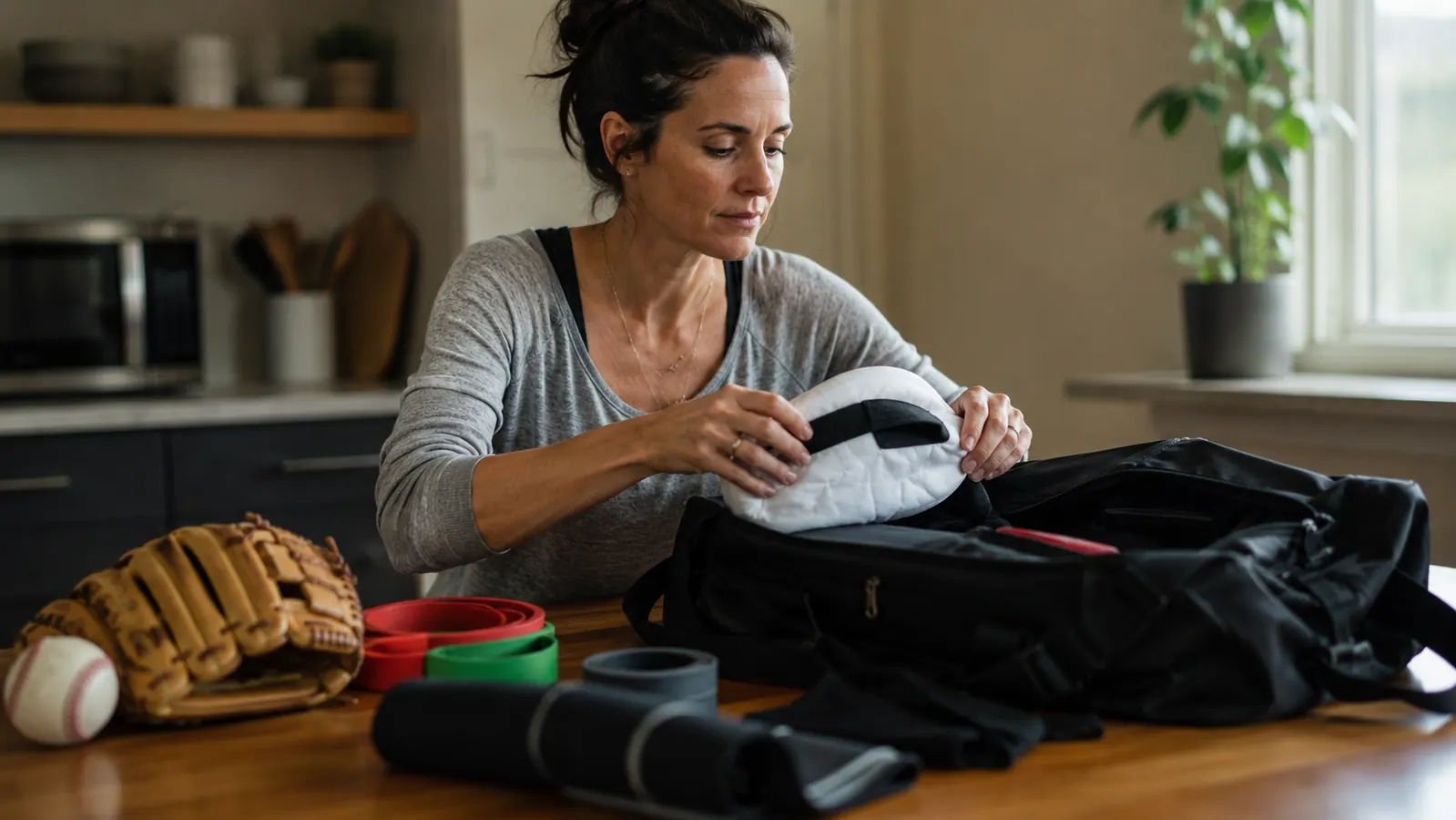
This wrap is the right choice for parents of teen pitchers aged 12 to 16 who are already committed to a post-outing icing protocol and want a cleaner, more reliable execution of it. It is also right for pitchers with a documented history of medial elbow inflammation, where consistency and correct placement matter more than improvisation. If your pitcher has had any UCL-related imaging, proper cryotherapy application after outings is not optional, and this wrap makes proper easier to achieve.
Who Should Skip It
If your pitcher is 17-plus, physically mature, and pitching at a high volume, I would order the adult version and not bother with the youth size. The fit margin is too narrow for older, bigger arms. Also skip this if you are looking for a single product that covers both shoulder and elbow simultaneously in one application; the PRO ICE design requires repositioning the same ice pack between locations rather than covering both at once. For a pitcher who has significant posterior shoulder soreness, that repositioning adds friction to an already tired post-game routine.
Six months of post-outing data is enough for me to keep this in Marcus's bag for the foreseeable future.
The PRO ICE Youth Pitcher Wrap is not perfect, but it is measurably better than a Ziploc and a prayer. If you want to give your pitcher a consistent, properly fitted cold therapy protocol after every outing, this is the cleanest way to do it at this price point. Check current pricing before you decide.
Amazon Check Today's Price on Amazon →