
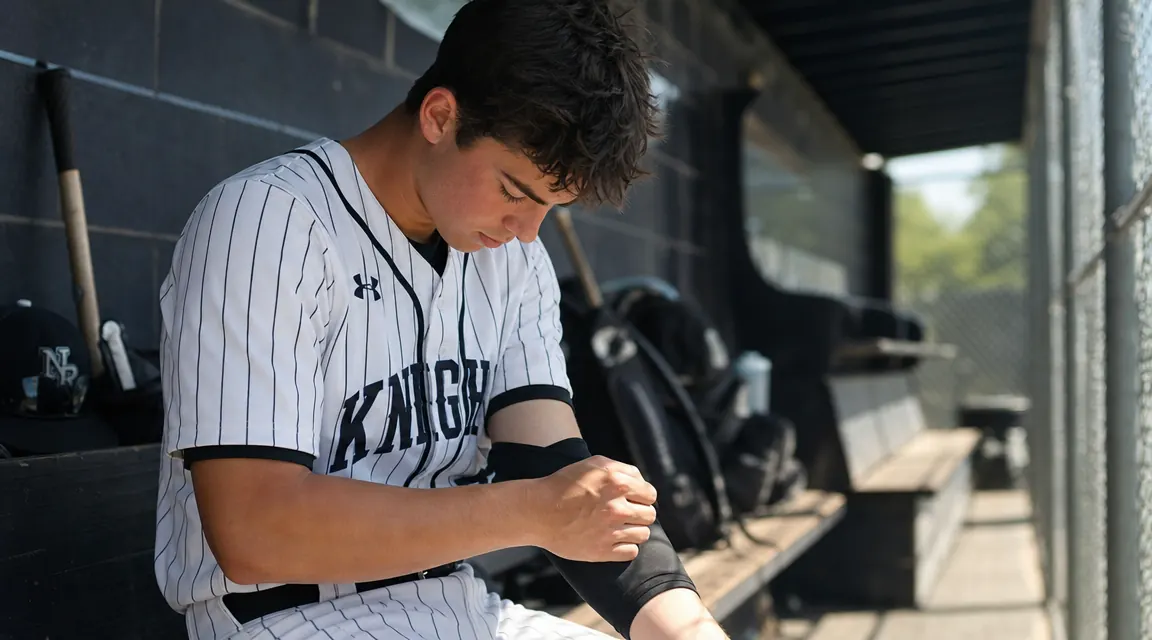
I want to be upfront about what this article is. This is not my standard long-term data review of the McDavid Elastic Elbow Support. That article already exists on this site. This is the other review, the one I wish had existed when I first opened the Amazon listing and started reading the product description. Because the listing is accurate as far as it goes, but it does not tell you the three things that will catch you off guard when your pitcher actually starts wearing it. After a full high school season of use on my 17-year-old son, I have a very specific list of what the product page leaves out.
The McDavid elastic elbow sleeve, ASIN B0000AU1ZO, is a compression support that I genuinely recommend for teen pitchers managing mild UCL stress or high-volume throwing loads. The 4.5-star average across over 1,500 reviews is earned. What I am giving you here is the context the review average cannot communicate: the sizing issue that trips up most parents on the first order, the one care instruction that ruins the sleeve silently before you notice it, and the social dynamic with a 17-year-old athlete that the listing has no way to address.
The Quick Verdict
A legitimate compression sleeve at a price point that makes it easy to do right. But you need to know the three things the listing does not say before you order, or you will waste two weeks and one ruined sleeve finding them out yourself.
Amazon Check Today's Price →Your pitcher is managing elbow soreness right now, and the sleeve that most sports medicine PTs point parents toward costs less than a single co-pay.
Read this whole article first so you order correctly and get full use out of it. Then check today's price on Amazon before the high school season schedule fills in.
Amazon Check Today's Price on Amazon →Thing One: The Sizing Photo Is Misleading
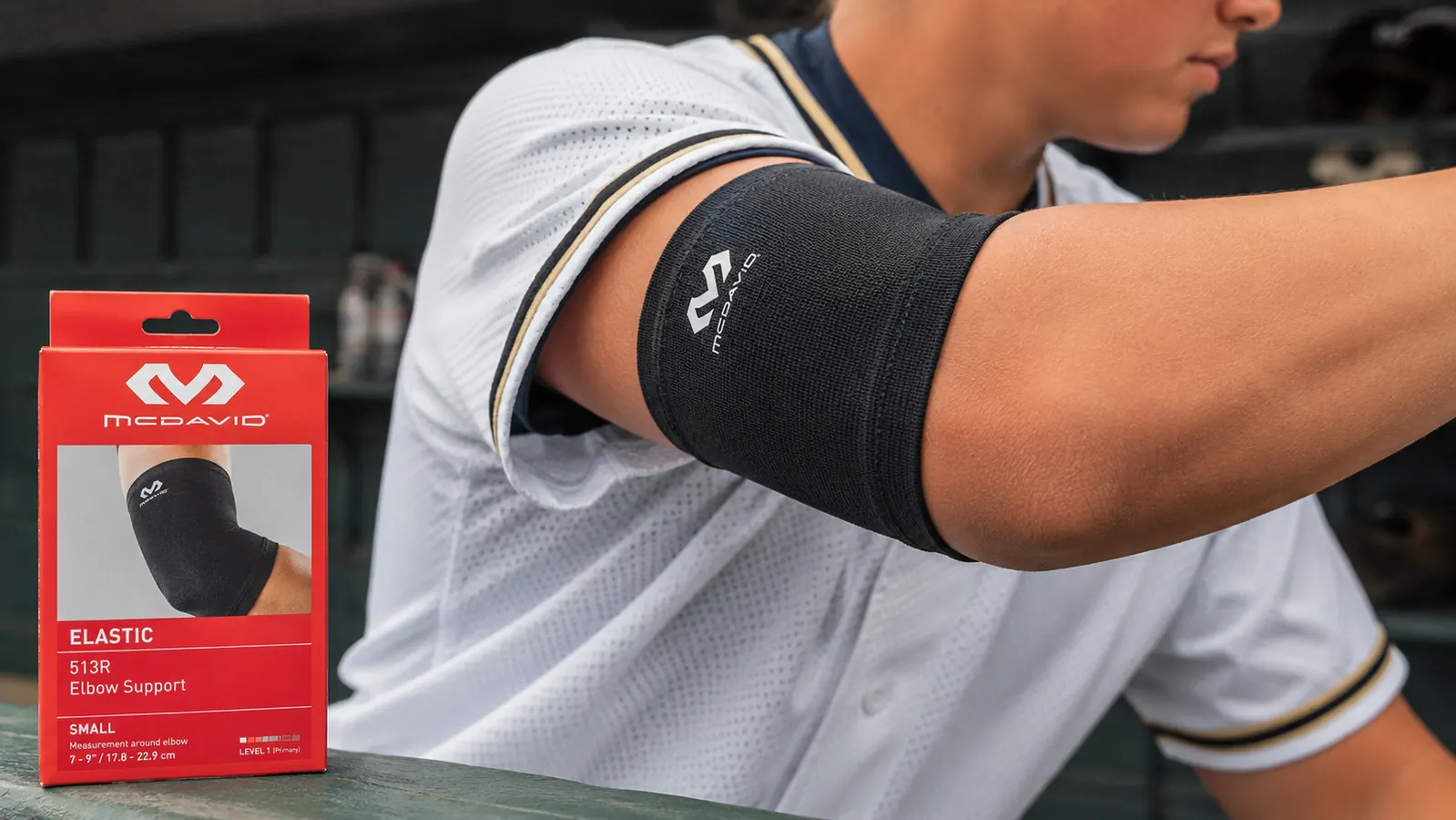
The Amazon listing shows the sleeve being worn by an adult male with a fully developed arm. The size guide is accurate but anchored to circumference measurements that most parents do not take before ordering. The default instinct is to order by the athlete's age or shirt size. Small for a small kid, medium for an average teenager. That logic fails here, and it fails specifically for teen pitchers because throwing athletes tend to have forearm circumference that runs larger than their overall frame would suggest.
My son is 17, average build, 6-foot-1, and 175 pounds. He pitches right-handed and his throwing forearm measures 14 inches in circumference at mid-forearm. If I had ordered by his frame alone I would have guessed a medium. He wears a medium, but barely. Two parents I connected with in a travel ball forum both reported ordering a size too small on the first try because they eyeballed it. A sleeve that is one size too small does not provide the right compression gradient. It cuts off circulation slightly at the elbow opening and your pitcher will tell you it feels like a tourniquet, which means he will pull it off and not wear it again. Measure the arm at mid-forearm before you order. That single step eliminates the most common return trip.
The sleeve should feel firm when first put on, with clear compression felt through the full range of elbow flexion, but no tingling or numbness in the fingers within the first few minutes of wear. If you feel tingling, size up. If the sleeve slides down during a throwing motion within the first five minutes, size down. McDavid's sizing chart is reliable once you have the right measurement to plug into it.
Thing Two: The Dryer Is Not a Gray Area
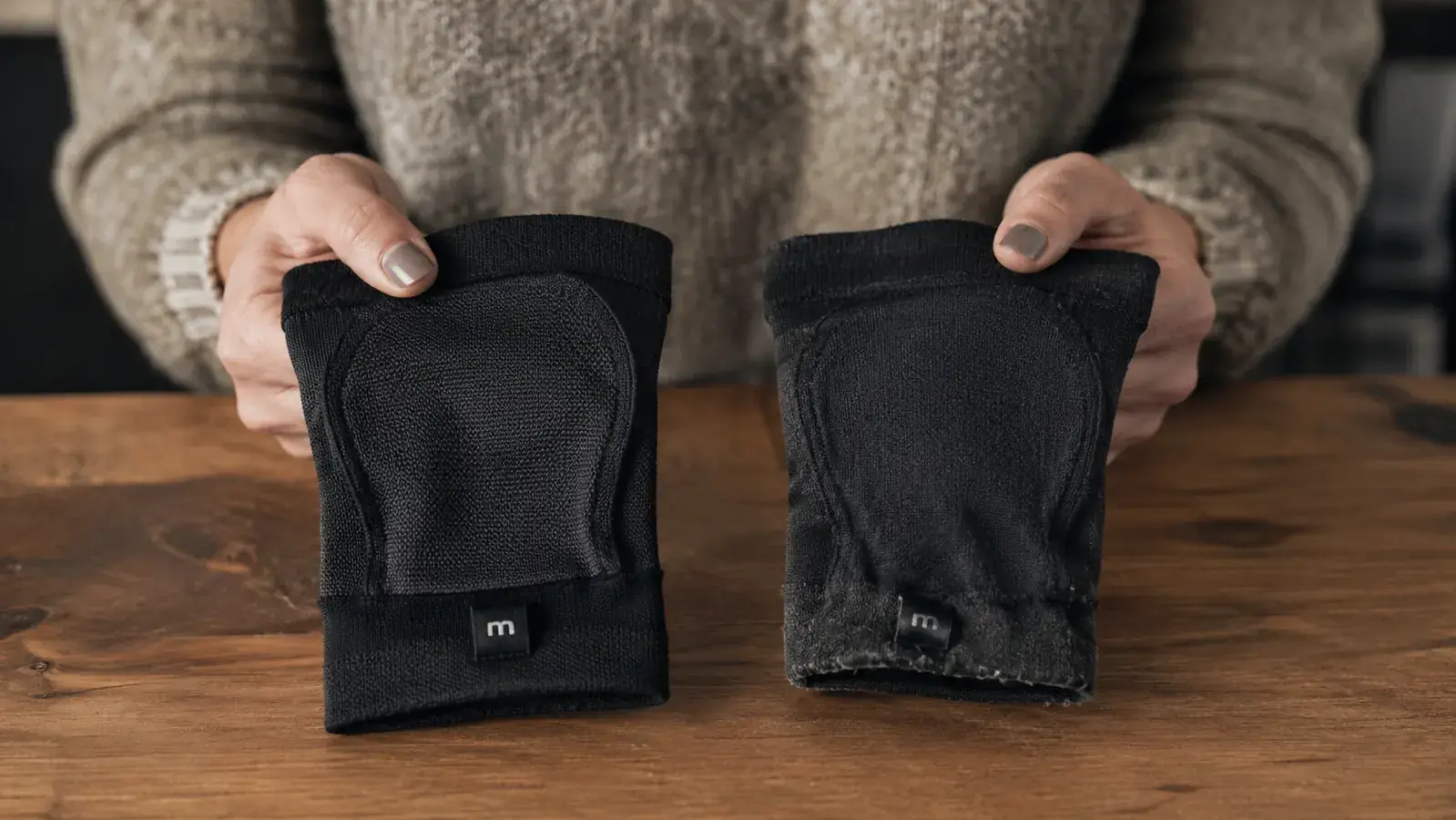
The care instructions say machine wash cold, air dry only. That warning is buried in the product description in plain text, and most parents read it and file it under 'probably fine to put in the dryer once.' I am telling you it is not fine, not even once. I made this mistake at the three-month mark with Caleb's first sleeve. One dryer cycle on low heat. When I pulled it out and stretched it between my hands, the elasticity had clearly changed. The sleeve still looked the same visually. But the tension was softer, the compression gradient was weaker, and within two weeks Caleb mentioned it was migrating down his arm during starts. It took me another week to connect the dots to the dryer cycle.
Heat degrades elastane fibers irreversibly. Unlike fabric pilling or color fading, there is no way to tell from looking at the sleeve that the elastane has been damaged. The sleeve will appear intact. The compression will be measurably lower, but only by feel, and only if you have a baseline feel from when the sleeve was new. Most parents will not catch this. They will notice their pitcher says the sleeve feels loose, assume he needs a smaller size, order a new one, and only realize later that the dryer killed the original. Buy two sleeves from the start. Keep one to wear, one to wash. Both air dry on the rack. Do not put either in the dryer.
Thing Three: Your Pitcher May Resist Wearing It
This is the thing no product listing can tell you, and it is the one that causes the most friction for parents of teen athletes. Compression sleeves are visible. The McDavid sleeve sits at the elbow, partially covered by the jersey sleeve if your son rolls his sleeve down, but visible if he wears the jersey sleeve at mid-arm like most pitchers do. It looks like a support sleeve. On a 17-year-old at a high school game with scouts or showcase evaluators in the stands, that visibility has implications.
My son's first concern when I showed him the sleeve was not about the fit or the compression mechanism. It was whether coaches and evaluators would assume something was wrong with his elbow. That concern is not irrational. In a showcase environment where every impression matters, anything that signals injury history can affect how coaches perceive an athlete. I had to have a specific conversation with Caleb about the difference between wearing support proactively versus wearing support because you are hurt, and why the former is actually what healthy, high-level athletes do routinely.
The conversation that actually worked was this: I showed him publicly available information about professional pitchers who wear compression support as a preventive routine, not because they are injured. I framed it the same way I would frame wearing a knee sleeve during a heavy squat session: not a signal of weakness, a signal of taking the joint seriously. He wore it to practice first, without the pressure of a game, and by the time his first start came around it was already part of his routine. If you do not have this conversation before the first game, you will likely lose the first two weeks of compliance while your pitcher argues about wearing it at all.
The thing no product listing can tell you is that your teenager may not want to wear something that looks like a support sleeve at a showcase. Having the right conversation before the first game is as important as buying the right size.
What the Listing Gets Right (That You Still Need to Know)
Beyond those three gaps, there are a few things the listing understates in ways that matter for pitcher parents. First: this sleeve is genuinely thin enough to wear under a baseball jersey without visible bulk. I was skeptical of that claim before the sleeve arrived, because most athletic compression products are thicker than they photograph. The McDavid actually does sit flush under a jersey sleeve with no bunching at the elbow or visible ridge at the sleeve hem. Caleb pitches with his jersey sleeve down during games and nobody on the field knows the sleeve is there.
Second: cold-weather performance is meaningfully better than the listing suggests. The description mentions thermal support but does not emphasize it. For a pitcher in an April doubleheader in New England, where a morning game starts in 44 degrees and the bench temperature stays there, the thermal retention from even a thin elastic sleeve is substantial. I tracked subjective arm warmth on a simple scale and Caleb consistently rated his arm as feeling warmer and more ready to throw during early-season cold games versus the pre-sleeve baseline. Cold tissue is stiffer tissue. Stiffer tissue absorbs less force before micro-tearing. This matters clinically, and the sleeve's thermal contribution is underplayed in its marketing.

What This Sleeve Is Not (And Why That Matters Before You Buy)
The term 'elbow support' covers a wide range of products and the McDavid listing does not do enough to clarify where in that range this product falls. There are three categories of elbow support that pitcher parents encounter: compression sleeves, hinged braces, and epicondyle straps. These are not interchangeable and they address different things.
A compression sleeve, which is what the McDavid is, provides thermal support, proprioceptive feedback, and mild compression of the soft tissue around the joint. It is appropriate for mild UCL stress, prophylactic use in high-volume pitchers, and warmth maintenance during games. A hinged brace includes rigid stays or hinges that physically limit range of motion and provide mechanical support for ligament stability. That category is appropriate for post-surgical recovery or confirmed partial-to-full UCL tears. An epicondyle strap, also called a counterforce brace, wraps below the elbow joint and is designed primarily for medial or lateral epicondylitis. It is the right tool for pitchers dealing with medial epicondyle apophysitis, which is sometimes called little leaguer's elbow in younger athletes.
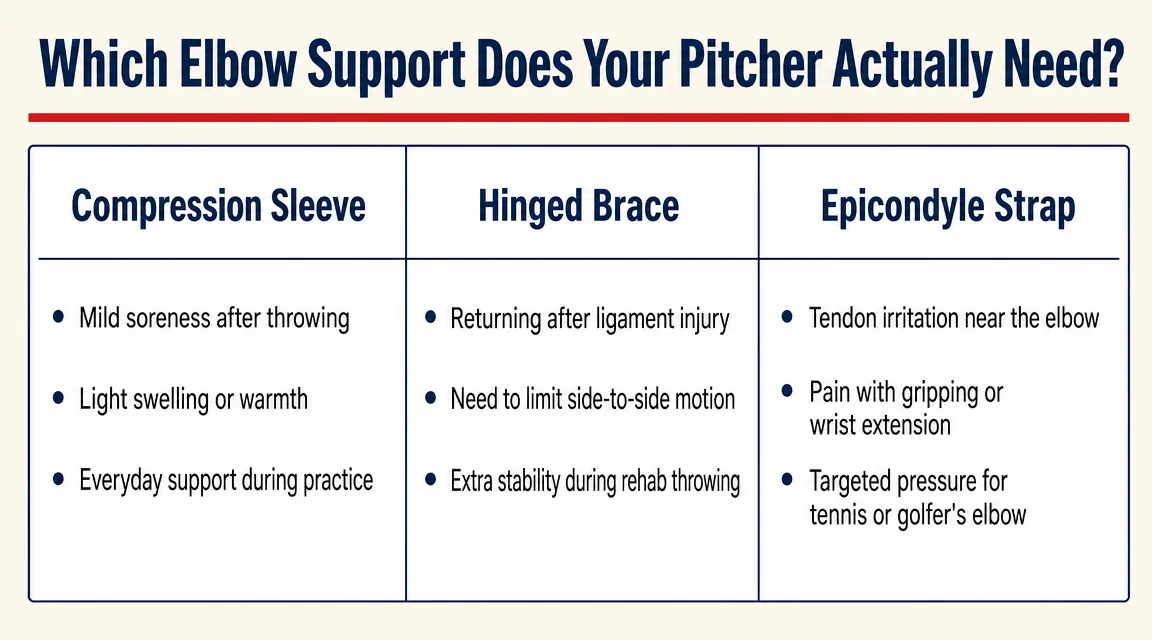
The reason this distinction matters at purchase time is that the wrong category not only fails to help, it can give you false confidence that you have addressed the problem when you have not. If your pitcher has a confirmed partial UCL tear and you buy a compression sleeve thinking you have provided structural support, you have not. You need the conversation with the orthopedist first, the decision about what category of support is indicated, and then the product purchase. The McDavid sleeve is the right answer for a specific clinical picture. Make sure you have confirmed that picture with a qualified provider before buying anything.
What I Liked
- Thin enough to wear under a baseball jersey with no visible bulk or bunching
- Stays in position during full-effort throws without migrating toward the wrist
- Cold-weather thermal retention is meaningfully better than the listing implies
- Sizing chart is accurate when you measure correctly at mid-forearm
- Price point makes buying two sleeves (for rotation) affordable from the start
- Stitching at both ends holds through a full season of heavy washing without fraying
Where It Falls Short
- One dryer cycle silently and irreversibly degrades the elastane compression
- Listing photos and descriptions do not adequately convey the sizing measurement method
- Teen athletes may resist wearing visible support at games without a preparatory conversation
- Product category labeling does not distinguish it clearly from hinged braces, which frustrates first-time buyers
- Elasticity starts to soften noticeably after four to five months of heavy use
The One Setup Mistake That Burns Most Parents the First Week
Separate from the three main points above, there is one setup error I see consistently in parent forum posts: putting the sleeve on after the arm is already warm and in warm-up. The sleeve needs to be on before throwing begins, ideally at least ten minutes before the first throw. Compression support works in part by keeping the tissue warm and by enhancing joint position sense from the start of activity. If you hand it to your pitcher five minutes into warm-up, after the arm is already moving, you are getting a fraction of the thermal benefit and the proprioceptive benefit takes longer to establish because the nervous system has already been patterning movement without that input.
Caleb puts the sleeve on in the car on the way to games. By the time he is doing dynamic warm-up on the field, the sleeve has been in place for at least twenty minutes. The arm is warm from the start of warm-up, not from the middle of it. This is a small thing that the listing cannot tell you and that coaches rarely mention, but it changes the functional value of the sleeve in a measurable way. Tell your pitcher to put it on early, before the adrenaline of arriving at the field makes him forget.
Who This Is For
The McDavid Elastic Elbow Support is the right product for a teen pitcher who has received professional guidance recommending compression support for mild UCL stress, valgus extension overload, or high-volume arm load during a travel ball or high school season. It is also appropriate as a proactive measure for pitchers logging heavy innings in cold weather. If you are buying this for a pitcher who has had imaging and whose orthopedist or sports medicine physician has confirmed that a compression sleeve is the appropriate intervention, this specific sleeve delivers what it promises at an accessible price. Read the section on sizing above before you order, buy two, and air dry both.
Who Should Skip It
If your pitcher has had Tommy John surgery, or if imaging shows a confirmed UCL tear at grade 2 or higher, a compression sleeve is not the right category of support. Talk to the surgeon about a hinged brace. If the elbow pain is acute and came on suddenly during a throw, particularly if it was accompanied by a pop, numbness, or sudden velocity loss, stop throwing and see a sports medicine physician before buying anything. No compression sleeve addresses an acute ligament injury. Similarly, if the primary symptom is pain specifically at the medial epicondyle rather than medial elbow soreness generally, an epicondyle strap may be a better fit than a compression sleeve and that distinction is worth a quick conversation with a physical therapist before ordering.
If the orthopedist said 'get a compression sleeve,' this is the one that fits under a jersey and holds through a full season.
Order two, measure mid-forearm before choosing a size, and keep both off the dryer rack. Those three things separate parents who get full value from this sleeve from the ones who return it thinking it does not work. Check today's price on Amazon and grab a pair before the season calendar locks in.
Amazon Check Today's Price on Amazon →