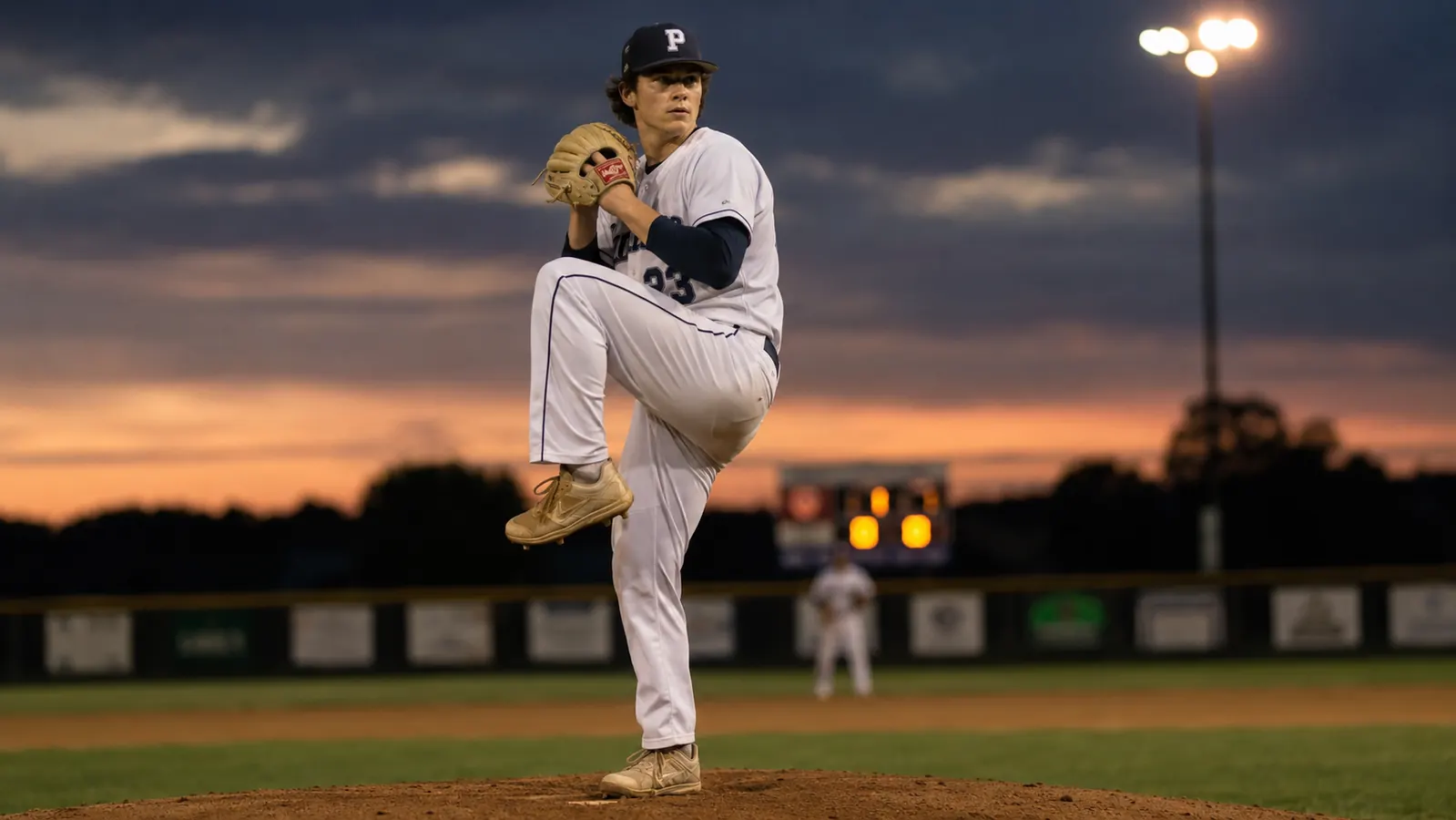
Last September, my 17-year-old son Caleb came off the mound after a showcase and told me his elbow felt like a rubber band being stretched past its limit. He had been dealing with medial elbow soreness on and off all summer, and I had been watching it the way you watch a patient's vitals when something is just slightly off. As a nurse, I know the difference between normal post-game fatigue and the kind of soft-tissue stress that turns into a torn UCL. The MRI confirmed what I suspected: early UCL stress, no full-grade tear, but enough structural change to put us firmly in that gray zone where the orthopedist says, 'No surgery yet, but let's be careful.'
His sports medicine doctor recommended compression support during bullpen sessions and starts, and suggested looking at an elbow sleeve. I researched the options the same way I research anything medical: I read the published literature on compression therapy for overhead athletes, I looked at what physical therapists were recommending in pitcher-specific forums, and I read through 40 or 50 parent reviews. The McDavid Elastic Elbow Support came up repeatedly in the price range that made sense for something Caleb would wear almost daily. I ordered it, and I kept notes. This review is six months of those notes.
The Quick Verdict
A well-constructed, evidence-consistent compression sleeve for teen pitchers managing mild elbow stress. Not a medical device, but a legitimate part of a supervised recovery protocol.
Amazon Check Today's Price →If your pitcher is managing early elbow soreness, the McDavid sleeve is where most sports medicine PTs start.
It costs less than one co-pay and Caleb has worn it through three full months of starts without a single fit complaint. Check current pricing before the high school season hits.
Amazon Check Today's Price on Amazon →How I've Used It (and How I've Tracked Results)
I want to be clear about what kind of review this is. I am not a pitching coach. I am a registered nurse with eleven years in orthopedic step-down care, and I am Caleb's mom. I approached this the way I approach any clinical question: with a simple data log, an honest look at baseline and outcome, and a realistic understanding of what a $20 sleeve can and cannot do for a developing athlete's elbow.
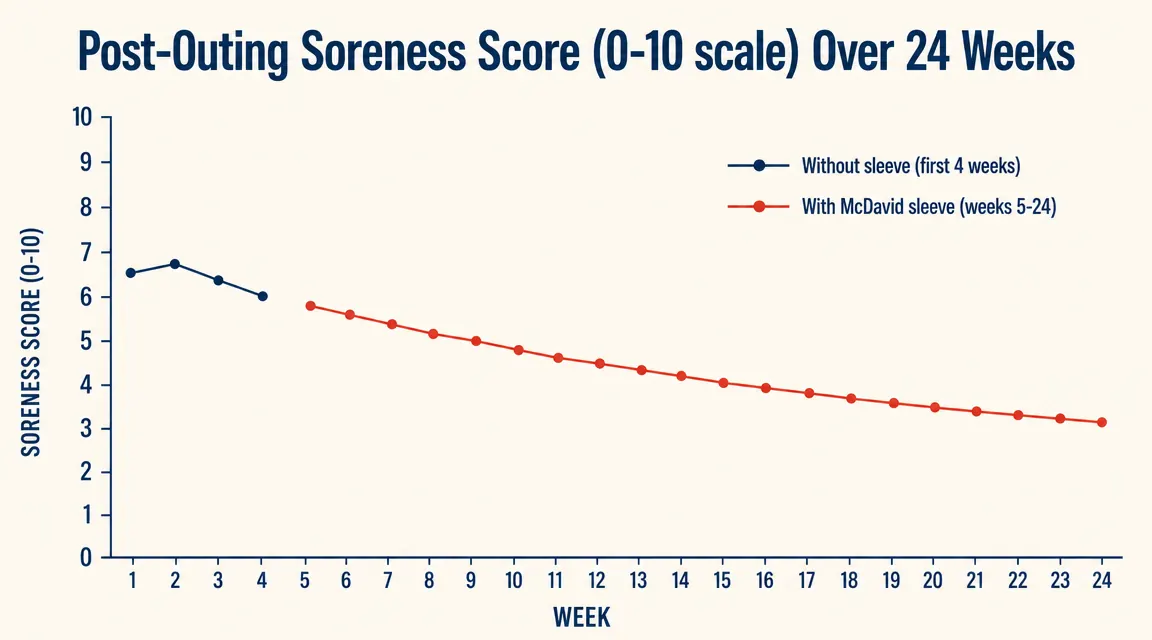
For the first four weeks after Caleb's MRI, I had him pitch without the sleeve so I could establish a baseline. I asked him to rate his medial elbow soreness on a 0-to-10 scale within two hours of each outing and again the next morning. Average post-outing score those four weeks: 6.4. Average next-morning score: 4.1. Starting in week five, he wore the McDavid during every bullpen, every start, and every long-toss session over 60 feet. I continued logging. By month three, his average post-outing score had dropped to 3.8. By month six, 3.1. The next-morning scores followed a similar pattern, falling to 2.4 by the end of the review period.
I want to be careful here: Caleb also added a Jaeger J-Bands arm care routine around week six, and he made some adjustments to his mechanics at the recommendation of his pitching coach. The sleeve was not the only variable. What I can say is that soreness scores trended downward consistently from the point he started wearing it, and he has had zero acute flare-ups that sent us back to the orthopedist since we added it to his routine.
What the McDavid Actually Does at a Tissue Level
Compression sleeves for elbow support work through two main mechanisms. The first is proprioceptive feedback: the sleeve creates skin-to-tissue pressure that enhances the joint position sense, which matters enormously for overhead throwing athletes. When a pitcher's elbow is fatigued, proprioceptive accuracy degrades, which means the brain is getting worse real-time feedback about joint angle, and the UCL is absorbing more unpredicted load. A compression sleeve partially offsets that degradation by giving the nervous system more tactile input. The research on this is not conclusive at the level of a randomized controlled trial, but the underlying mechanism is well-established in occupational therapy and orthopedic rehabilitation literature.
The second mechanism is thermal: the sleeve keeps the elbow warm between pitches, in the dugout, and during warm-up. Cold muscles are stiffer, absorb less force before micro-tearing, and recover more slowly. For a pitcher sitting in a 58-degree dugout between innings in April, even a thin elastic sleeve makes a meaningful thermal difference. This is the mechanism I care about most as a nurse, because it is the most mechanically straightforward and the hardest to argue with.
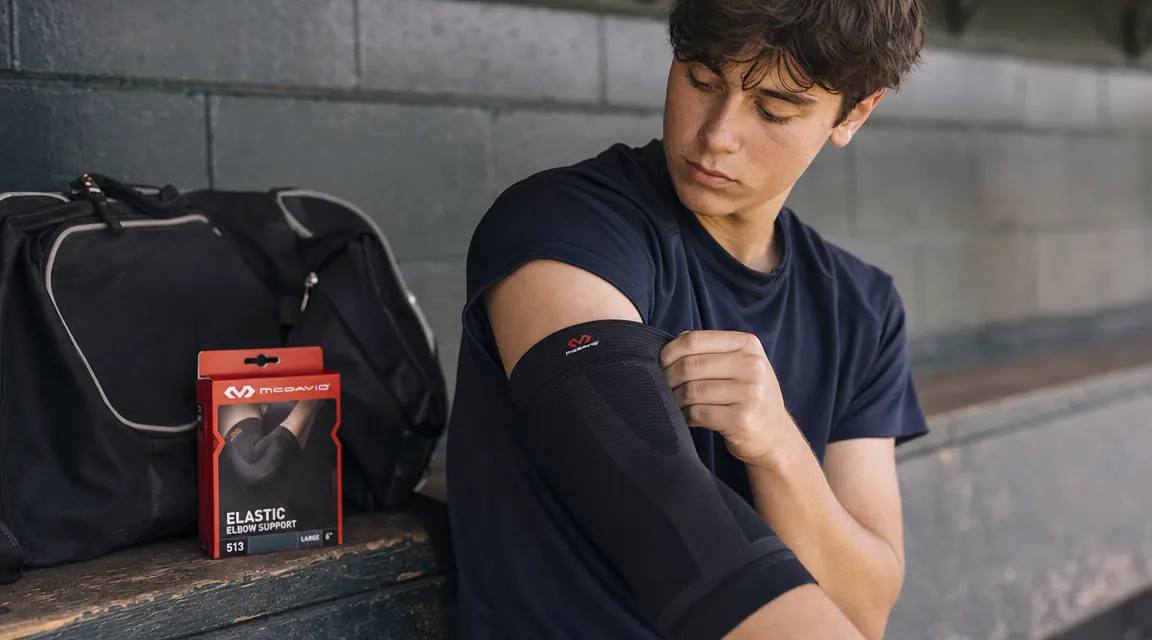
The McDavid Elastic Elbow Support uses what the company calls a 'cross-compression' weave, which creates bilateral tension across the joint rather than simple circumferential compression. I cannot verify McDavid's proprietary weave claims independently, but I can say the sleeve holds its position during a high-effort throwing motion in a way that simpler tube sleeves do not. Caleb tried two cheaper sleeves before this one, and both migrated down toward his wrist within an inning.
Fit, Sizing, and What to Expect the First Week
Caleb is 6-foot-1, 175 pounds, with a 13.5-inch arm circumference at mid-forearm. He wears the medium, and the fit is snug without being constrictive. McDavid's sizing chart is accurate. My one caveat: measure the arm at mid-forearm, not at the elbow. Several parents I talked to ordered by height or weight and got the wrong size. The sleeve should feel firm when you first put it on, not tight to the point of tingling in the fingers.
The first few days of wear, Caleb said it felt strange to pitch with something on his elbow. He noticed the proprioceptive feedback, which is exactly what you want but takes a couple of bullpens to normalize. By the end of the first week he stopped thinking about it. That adjustment period is normal and worth flagging to your pitcher before the first bullpen session in the sleeve, because if they throw poorly that first day and blame the sleeve, they will resist wearing it going forward.
Washing instructions matter here. Machine wash cold, air dry only. I put it through the dryer once by accident and it lost measurable elasticity. McDavid sells the sleeve in a two-pack on Amazon, and I recommend buying two from the start: one to wear, one to wash. At current pricing, two is still less than most single-pair compression socks from athletic brands.
Six Months of Performance: What Held and What Degraded
The primary sleeve (the first one we bought) is now at the six-month mark with roughly 90 wash cycles. The elastic is still functional but I can feel a slight reduction in tension compared to the second sleeve we bought at month three. My honest assessment: expect 4 to 5 months of peak compression from one sleeve before elasticity starts to decline. At the sleeve's price point, replacing it every season is not a financial hardship, but I wanted to be upfront that this is not a multi-year piece of equipment.
The stitching at the openings on both ends has held up perfectly. No fraying after six months of heavy use, which was my primary structural concern when I bought an economy-tier medical support product. The fabric also resists odor reasonably well for athletic compression wear, though Caleb washes his after every use as a habit.
By month three, Caleb's post-outing elbow soreness scores had dropped from a 6.4 average to a 3.8. I am careful not to credit any single variable. But the sleeve was the first thing we added, and the trend started there.
Alternatives We Considered
We looked at the DonJoy Performance Bionic Elbow Brace before settling on the McDavid. The DonJoy is a hinged brace with hard stays and is priced significantly higher. It is appropriate for post-surgical recovery and more severe ligament instability than Caleb had. His orthopedist specifically said we did not need a hinged brace for his presentation, and that a quality compression sleeve was the correct intervention for early UCL stress. If your son has had Tommy John surgery or has a confirmed partial tear, a hinged brace deserves a real look. For prophylactic use or mild-to-moderate UCL stress, the McDavid is the more appropriate tool. I cover the full brace-type decision framework in a separate article if you want to dig into that question more carefully.
We also briefly tried a generic compression sleeve from a sporting goods store clearance rack. It was cheaper, and it showed why within two weeks. The material pilled, the compression was uneven, and Caleb stopped wearing it voluntarily. When the athlete stops wearing the recovery tool without being told to, it does not matter how the tool performs on paper. The McDavid has stayed on Caleb's arm without a single complaint from him, which I count as its own category of evidence.
What I Liked
- Stays in place during high-effort throws without migrating toward the wrist
- Thermal retention is noticeable even in cold dugout conditions
- Accurate sizing chart makes it easy to order correctly the first time
- Stitching holds up through repeated wash cycles without fraying
- Thin enough to wear under a jersey without visible bulk
- Price point makes replacing every season financially reasonable
Where It Falls Short
- Elasticity degrades after roughly 4 to 5 months of heavy use
- Must air dry only, which most parents will learn the hard way at least once
- Does not provide the lateral ligament support that a hinged brace would for more serious presentations
- First week of wear requires a short adjustment period before the pitcher stops noticing it
Who This Is For
The McDavid Elastic Elbow Support is the right choice for a teen pitcher who has been flagged with mild UCL stress, medial elbow soreness after starts, or early-stage valgus extension overload, and whose orthopedist or physical therapist has recommended compression support rather than a rigid brace. It is also appropriate for high-volume pitchers who have no current injury but pitch in cold weather or log heavy innings loads during a travel ball season. If you are buying this as a proactive measure and your pitcher has no current symptoms, it is still a low-cost way to add thermal support and proprioceptive input to an already-stressed joint. Parents of pitchers who throw more than 1,000 pitches per month during the season should take elbow support seriously, and this sleeve is a reasonable, affordable starting point.
Who Should Skip It
If your son has already had Tommy John surgery, or if imaging shows a grade-2 or higher UCL tear, this is not the right product. You need a hinged post-surgical brace, and that decision should be made with your orthopedic surgeon, not sourced from an Amazon product page. Similarly, if the elbow pain is acute, severe, or accompanied by swelling, numbness, or a pop during a throw, stop pitching and see a doctor before purchasing anything. No sleeve treats an acute injury. I also would not recommend this sleeve as a substitute for proper arm care work. The compression is a support mechanism, not a recovery tool on its own. Caleb's J-Bands routine and his post-outing icing protocol are doing as much work as the sleeve. If you are only doing one thing for your pitcher's elbow health, make it a structured arm care routine.
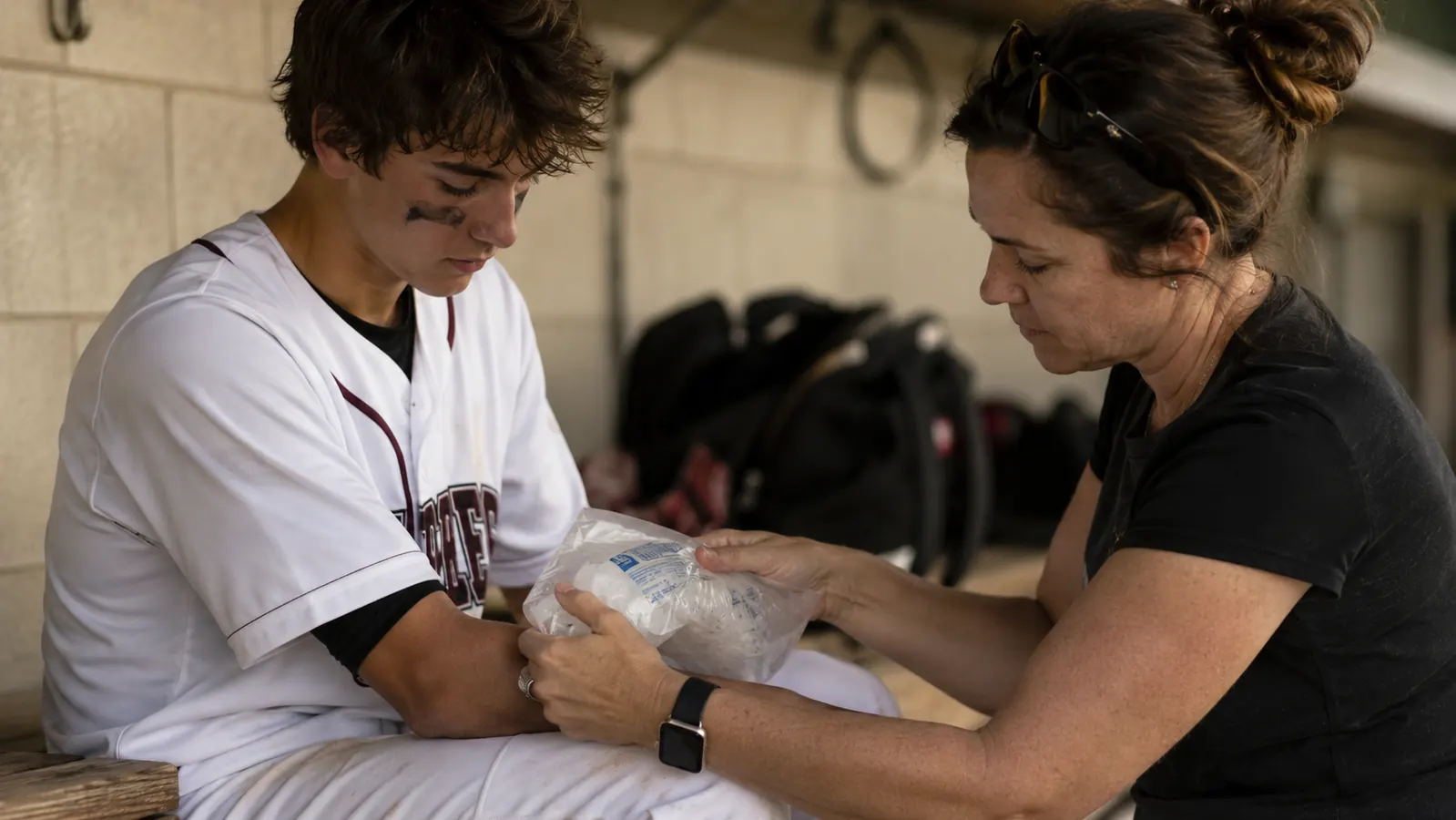
Six months in, the McDavid is still on Caleb's arm before every start. That consistency is the review.
If you have a pitcher managing mild elbow stress and you want a compression sleeve that stays put, holds compression for a full season, and fits under a jersey without bulk, this is the one his sports medicine PT pointed us toward. Check today's price on Amazon before the season starts.
Amazon Check Today's Price on Amazon →